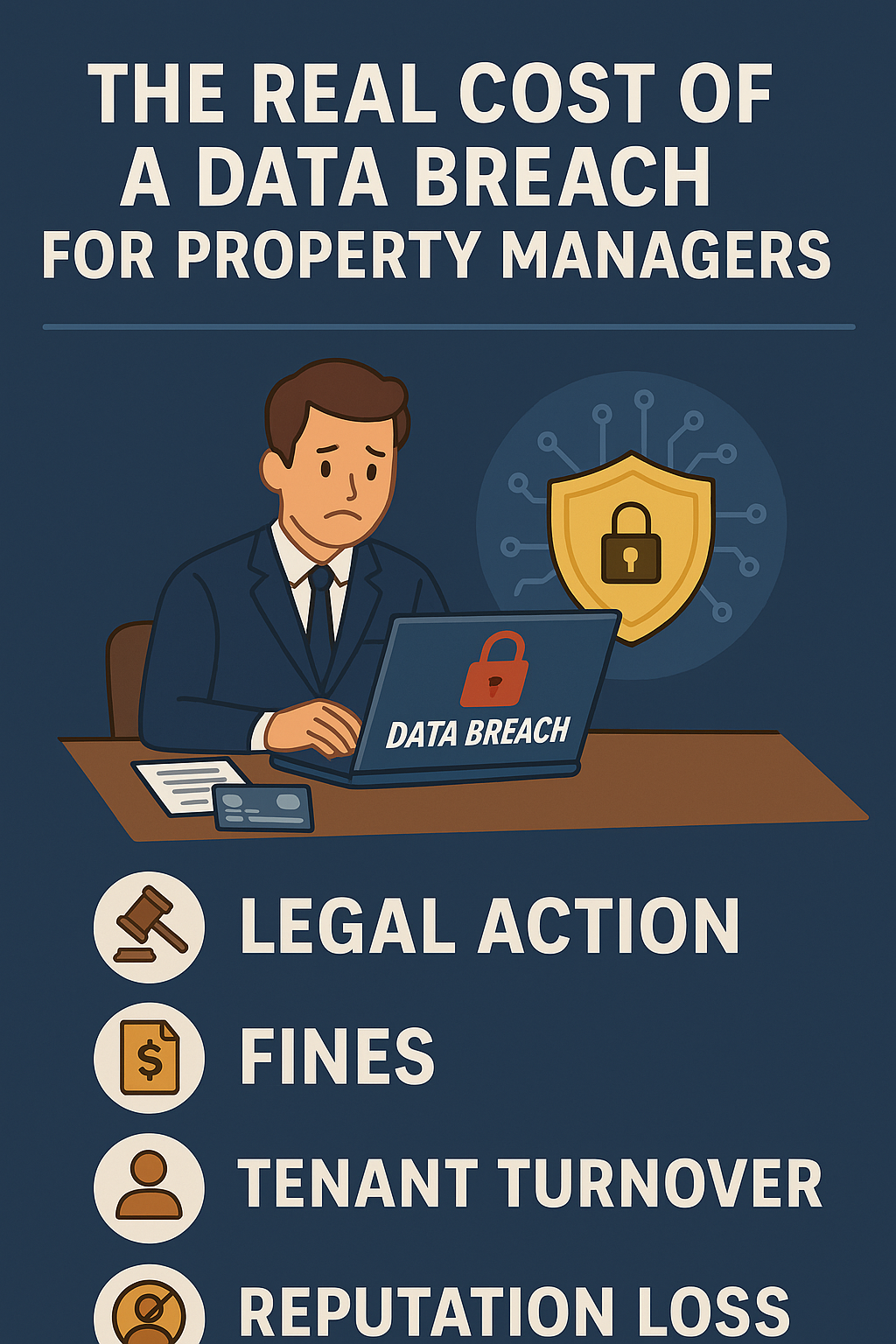
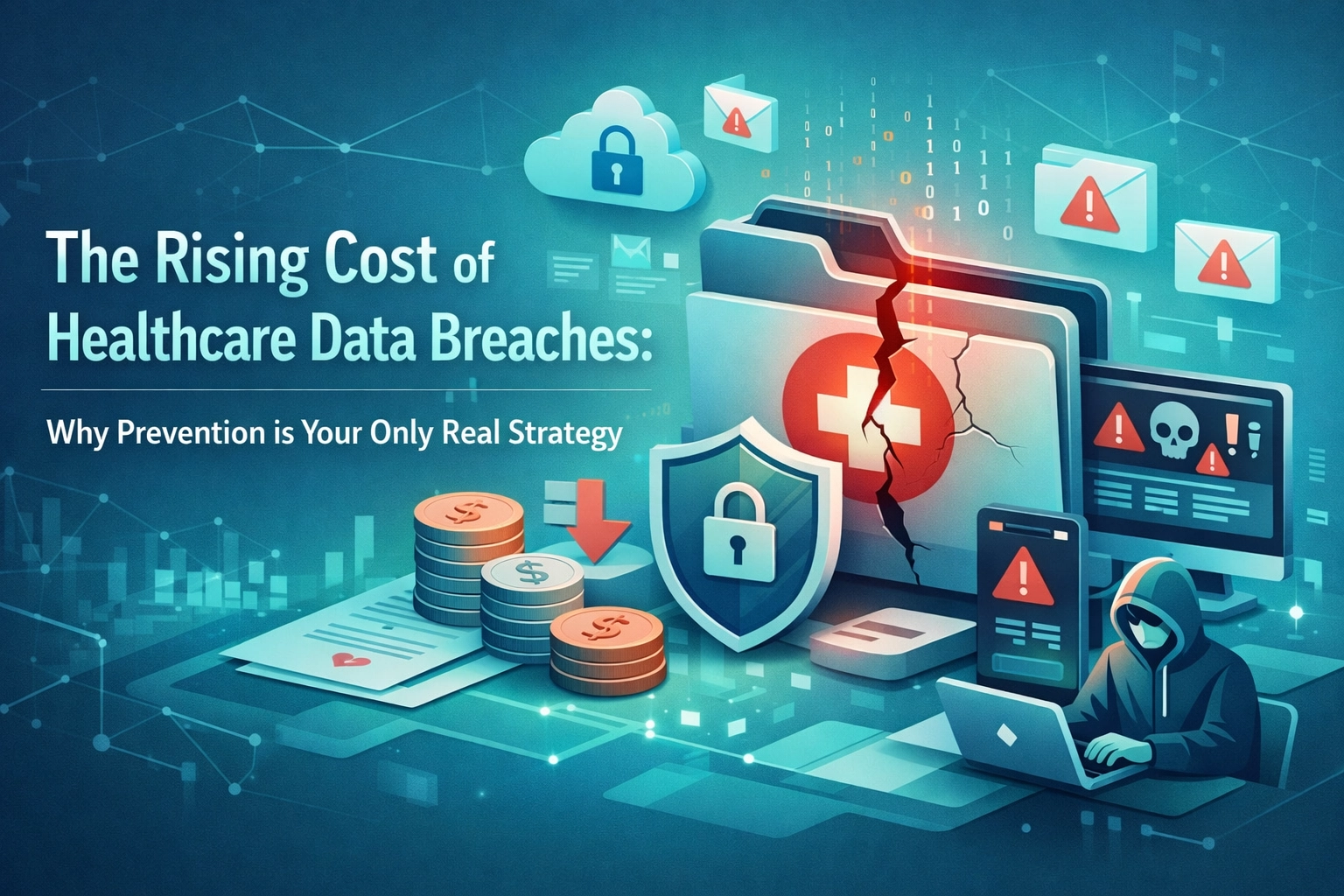
Healthcare data breaches now average $10 million per incident. That's not a projection: it's the current cost of failure. And unlike credit card numbers that can be canceled or social security numbers that trigger monitoring, healthcare data is permanent. Your diagnosis history, prescription records, and genetic information never expire. That's exactly why it commands premium prices on the dark web and why healthcare organizations remain the most expensive targets to breach.
The Permanence Problem: Why Healthcare Data Sells for More
A stolen credit card might fetch $5 on the black market. A complete medical record? Between $250 and $1,000. The math is simple: financial data has a short shelf life, but medical information is forever. Hackers know this. Insurance fraudsters know this. Identity thieves building complete profiles know this.
Your patient records contain everything needed for sophisticated fraud: full legal names, birthdates, addresses, social security numbers, insurance policy details, and comprehensive medical histories. This combination enables insurance fraud, prescription drug schemes, medical identity theft, and even blackmail in sensitive cases.
More than 846 million patient records have been exposed since 2009: that's 2.6 times the entire U.S. population. These aren't just statistics. Each record represents a permanent vulnerability for a real person who trusted a healthcare provider to protect their most sensitive information.

Triple Extortion: When Hackers Skip You and Go Straight to Your Patients
The traditional ransomware playbook looked like this: encrypt your files, demand payment, restore access. That model is obsolete.
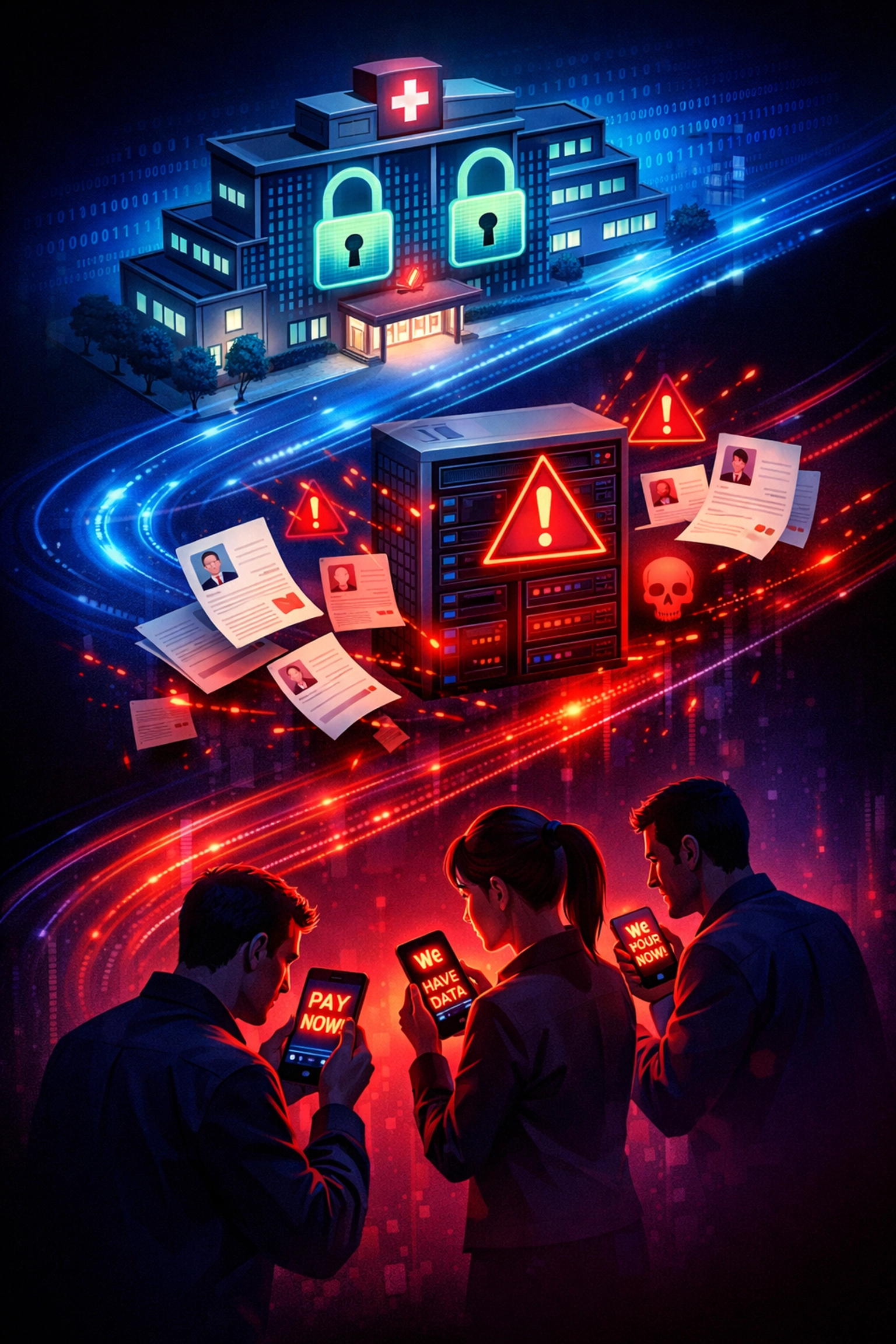
Today's attacks follow a three-stage extortion process that maximizes pressure and profit:
Stage 1: Encrypt your systems and demand ransom for the decryption key.
Stage 2: Threaten to publish the stolen patient data publicly unless you pay a separate ransom.
Stage 3: Contact your patients directly, threatening to expose their personal medical information unless they pay individual ransoms.
This third stage represents a fundamental shift. Hackers now bypass healthcare organizations entirely and monetize the breach by threatening patients with exposure of HIV status, mental health treatment, fertility issues, or other sensitive conditions. Your clinic or practice faces the breach costs and regulatory penalties while your patients face extortion and psychological harm.
The reputational damage is catastrophic. Patients who receive extortion messages don't blame the hackers: they blame you for failing to protect their data.
The Operational Shutdown: Why Encryption is No Longer the Main Threat
Recent breaches reveal a disturbing evolution. Attackers are no longer satisfied with encrypting data and collecting ransom. They're intentionally crippling entire operational infrastructures, forcing healthcare providers into complete shutdowns that last weeks or months.
The Change Healthcare breach disrupted prescription processing, insurance claims, and payment systems for healthcare providers nationwide. The total cost exceeded $3 billion, but the operational impact couldn't be measured in dollars alone. Patients couldn't fill prescriptions. Physicians couldn't verify coverage. Billing ground to a halt.
This shift has critical implications for your backup strategy. Traditional backups assume you can restore encrypted files and resume operations. That assumption is wrong. Modern attacks target your backups directly, corrupt your recovery systems, and compromise the infrastructure needed to restore operations.
You need immutable backups: copies that cannot be altered or deleted, even by privileged administrators. You need offline backups that attackers cannot reach through network access. You need tested recovery procedures that your team has practiced, not theoretical plans that look good on paper.
The Detection Gap: 213 Days of Invisible Damage
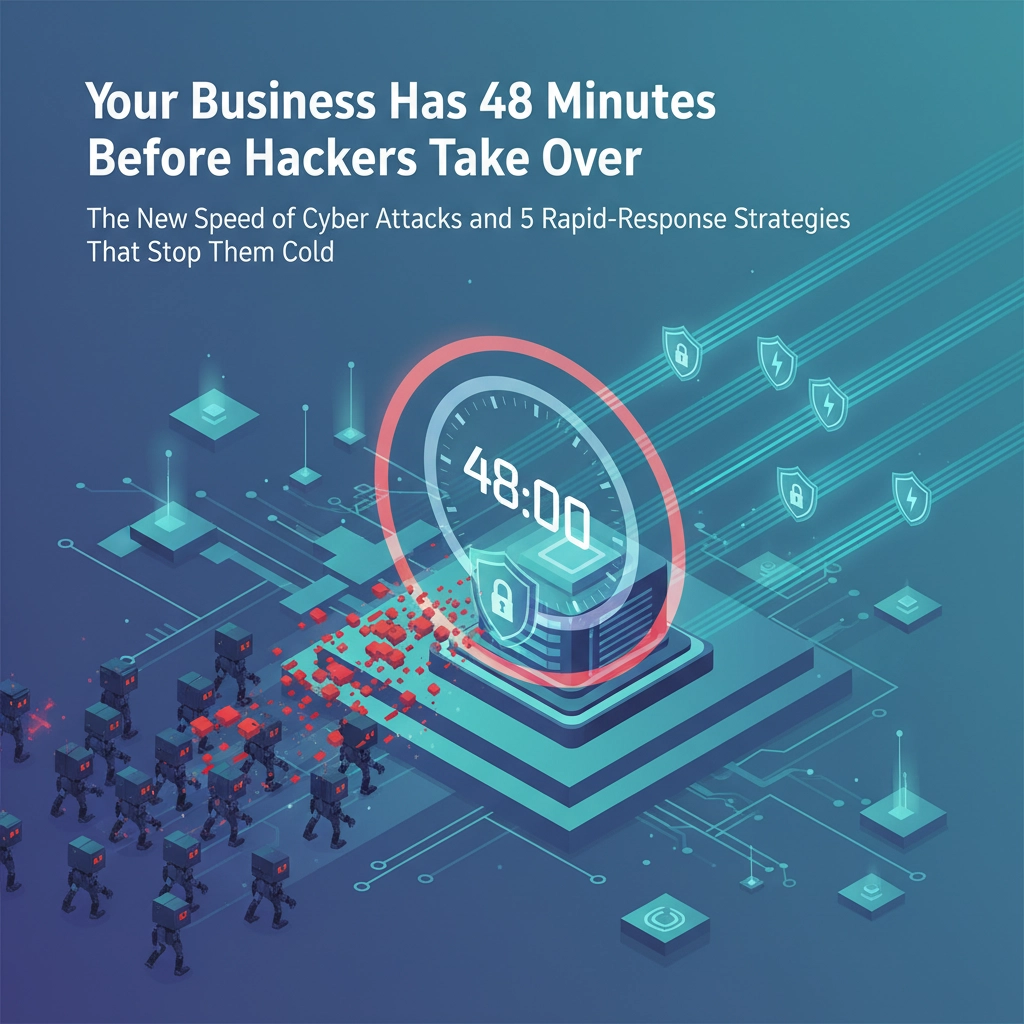
Healthcare breaches go undetected for an average of 213 days. That's more than seven months of unrestricted access to your most sensitive systems. Every day of undetected access increases the breach cost by approximately $35,000.
Organizations that identify and contain breaches within 200 days reduce their total costs by 23%. The detection gap isn't just a security metric: it's a direct cost multiplier.
The challenge is that healthcare environments are complex. You're running electronic health record systems, medical devices, billing platforms, patient portals, and administrative systems: often from different vendors with varying security standards. Monitoring all of these for anomalous behavior requires dedicated expertise and continuous vigilance.
Three Prevention Strategies That Actually Work
Prevention isn't theoretical. Organizations implementing specific security controls achieve measurably better outcomes. Here's what separates prepared healthcare organizations from breach victims:
1. Network Segmentation to Isolate Medical Devices
Your MRI machine doesn't need access to your billing system. Your infusion pumps don't need internet connectivity. Your blood analyzers don't need to communicate with your patient portal.
Yet in many healthcare environments, everything connects to everything else. This flat network architecture means a compromised medical device becomes a pathway to your entire infrastructure.
Proper network segmentation creates isolated zones:
- Medical devices operate on dedicated networks with restricted access
- Administrative systems remain separate from clinical systems
- Guest WiFi is completely isolated from internal networks
- Each segment has specific firewall rules limiting communication
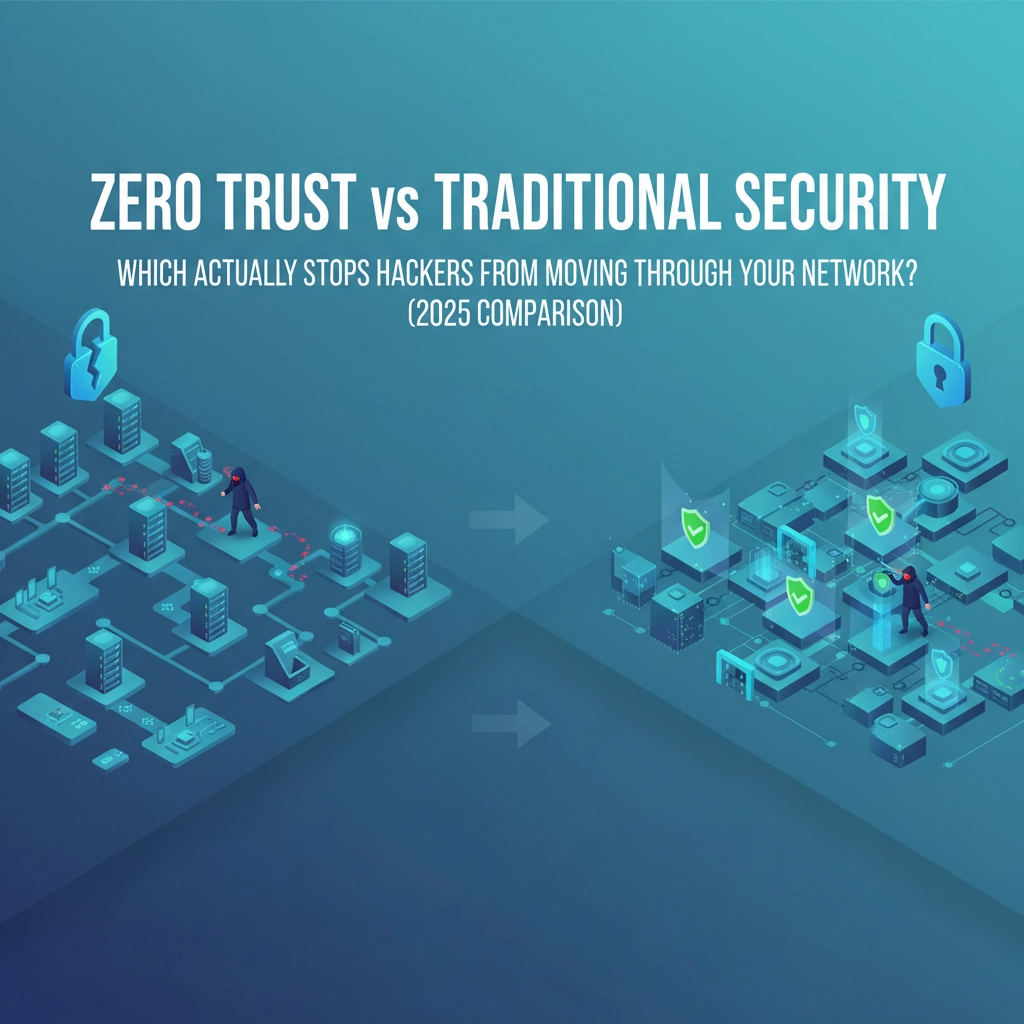
This approach contains breaches. If an attacker compromises one system, segmentation prevents lateral movement to other networks.

2. Zero-Trust Access for Third-Party Vendors
Your EHR vendor needs remote access for support. Your medical device manufacturer requires connectivity for monitoring. Your billing company needs access to patient data. Your IT contractor needs administrative privileges.
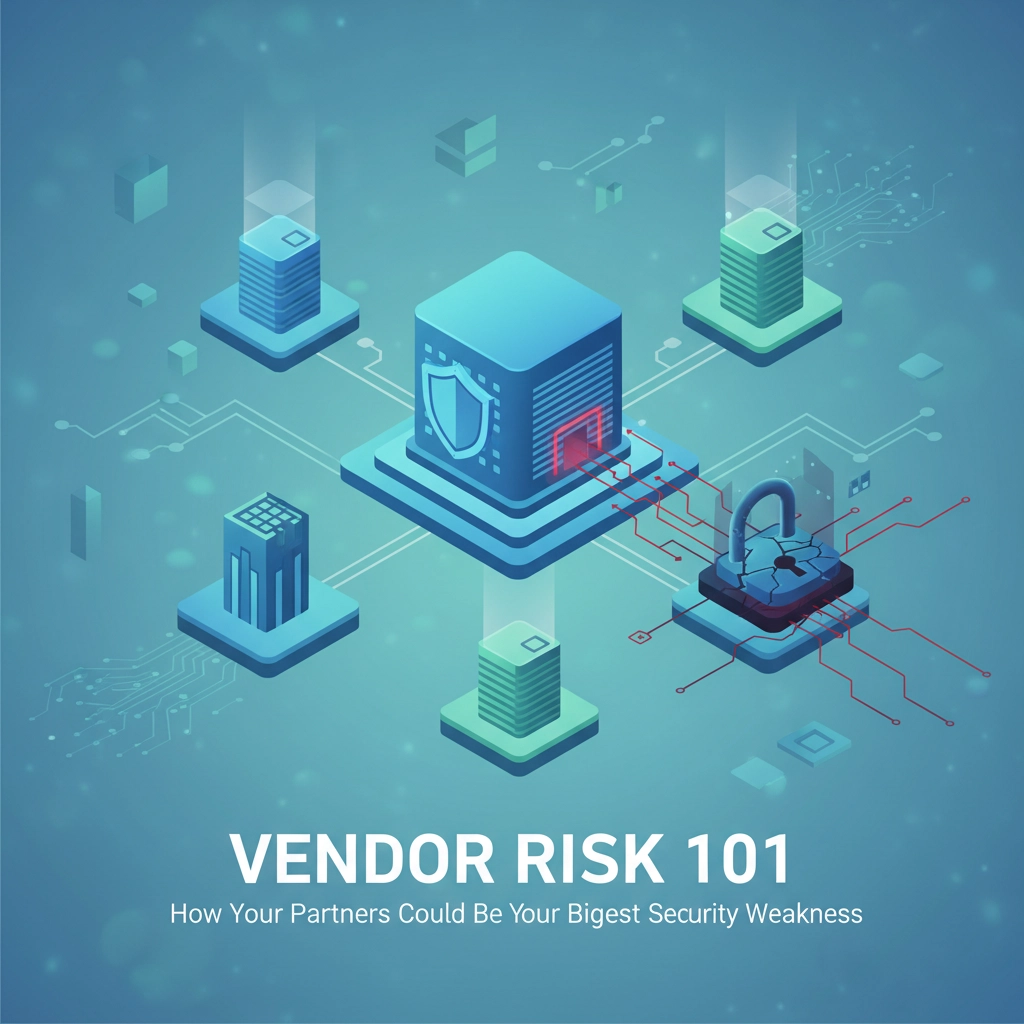
These vendor relationships create risk. The Change Healthcare breach reportedly started with compromised vendor credentials. Third-party access remains a leading breach vector because vendors often have excessive privileges, weak authentication, and inadequate monitoring.
Zero-trust access means:
- No automatic trust based on network location
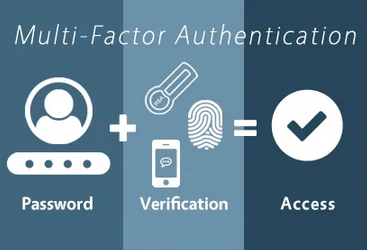
- Multi-factor authentication required for all vendor access
- Just-in-time access that expires after specific time periods
- Continuous verification of user identity and device security
- Detailed logging of all vendor activities
One compromised vendor account should not mean a complete system compromise.
3. Tabletop Breach Simulations
Your incident response plan looks comprehensive in the binder. But does your team know who to call first when ransomware hits at 2 AM on Sunday? Does your office manager know how to activate backup communication systems when email goes down? Do your clinicians understand the procedures for documenting patient care when the EHR is offline?
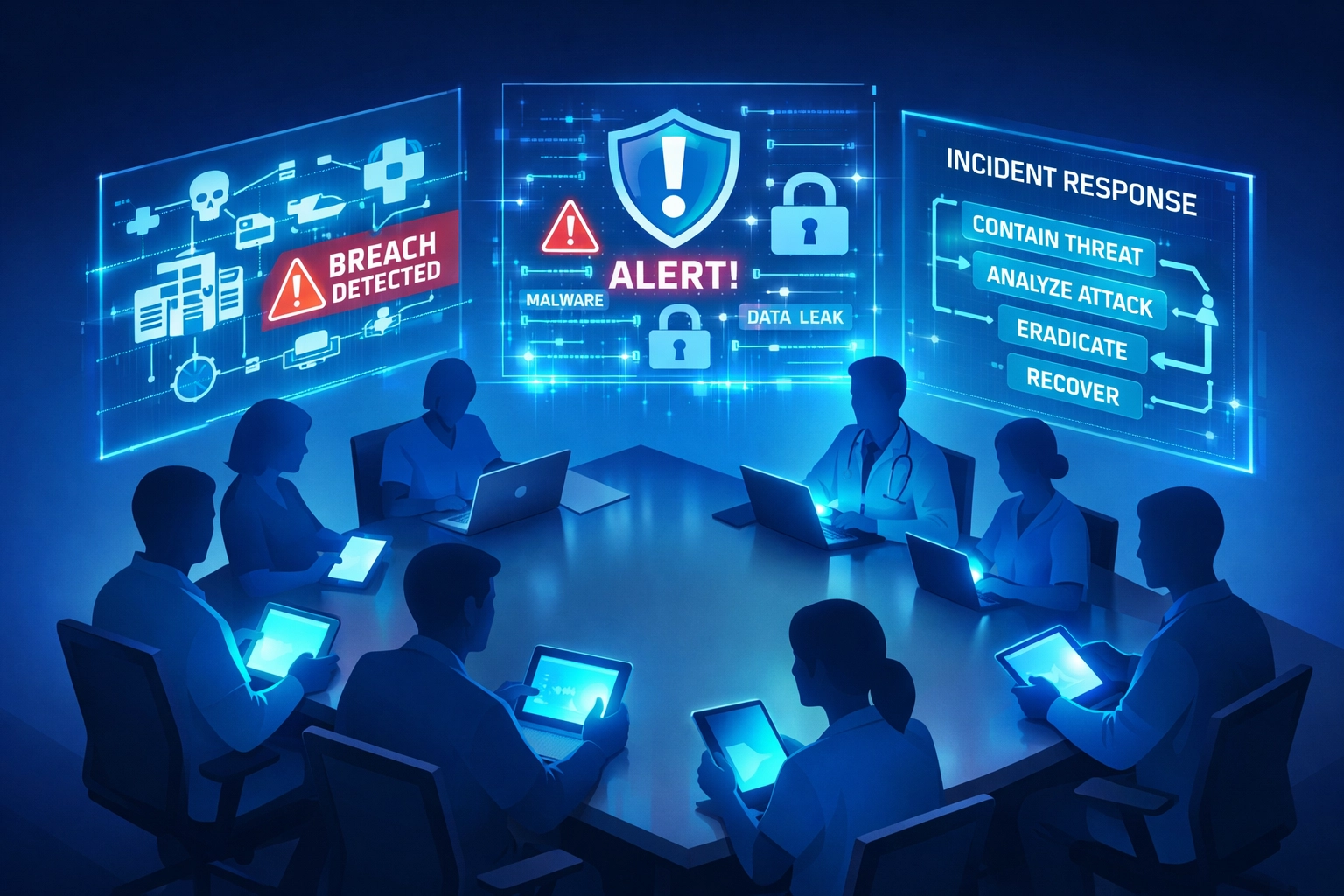
Tabletop exercises simulate breach scenarios without the operational disruption of full-scale drills. Your team walks through realistic attack scenarios, identifies gaps in your response procedures, and practices critical decisions in a low-pressure environment.
These simulations consistently reveal:
- Communication breakdowns between clinical and IT staff
- Confusion about decision-making authority during incidents
- Gaps in backup procedures and manual workarounds
- Inadequate vendor contact information for emergency support
- Unrealistic assumptions about recovery timeframes
Organizations that conduct quarterly tabletop exercises respond faster when real incidents occur, reducing both the breach timeline and the total cost.
The Economics of Prevention
Organizations investing in AI and automation for cybersecurity reduce breach costs by an average of $1.76 million while simultaneously cutting the breach lifecycle by 108 days. Prevention isn't an expense: it's the most cost-effective strategy available.
Consider the math: a $10 million average breach cost versus proactive security investments that typically run $50,000 to $200,000 annually for small to mid-sized healthcare providers. Even preventing a single breach in a decade generates a positive return on investment.
But prevention isn't just about financial calculations. It's about maintaining patient trust, ensuring continuity of care, and avoiding the regulatory scrutiny that follows major breaches. It's about not appearing in news headlines as another healthcare provider that failed to protect sensitive patient information.
Your Patients Deserve Better Than Reactive Security
Healthcare providers who treat security as a compliance checkbox rather than a patient safety issue inevitably face breaches. The question isn't whether you'll be targeted: it's whether you'll be prepared when the attack comes.
Triple extortion. Operational shutdown. Direct patient intimidation. These aren't distant threats. They're happening now to healthcare organizations that believed their existing security was adequate.
Prevention requires expertise, continuous monitoring, and proactive security management. B&R Computers provides comprehensive cybersecurity solutions designed specifically for healthcare providers. We handle the complexities of HIPAA compliance, network segmentation, vendor access management, and breach prevention so you can focus on patient care with confidence that your data protection strategy actually works.
Don't wait for a breach to discover your vulnerabilities. Contact us to schedule a security assessment and learn how proactive protection beats expensive recovery every single time.