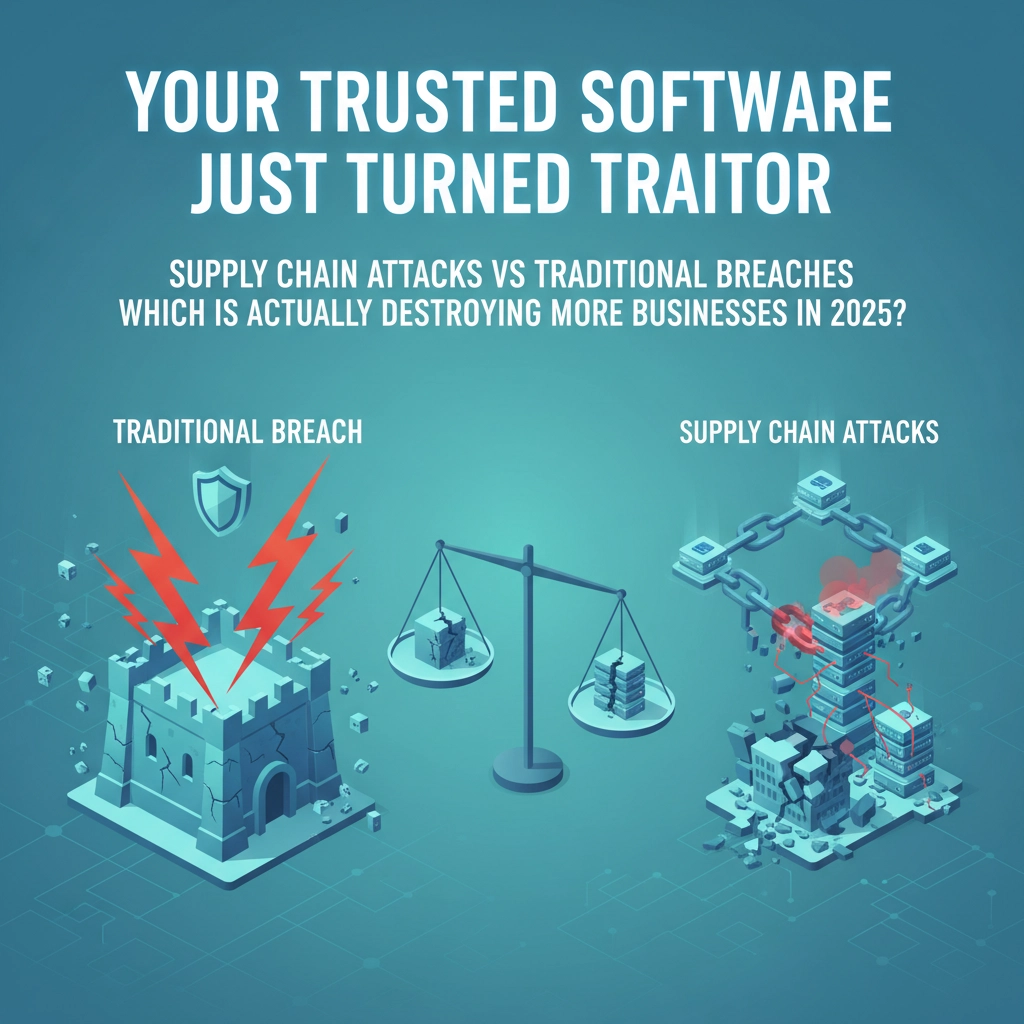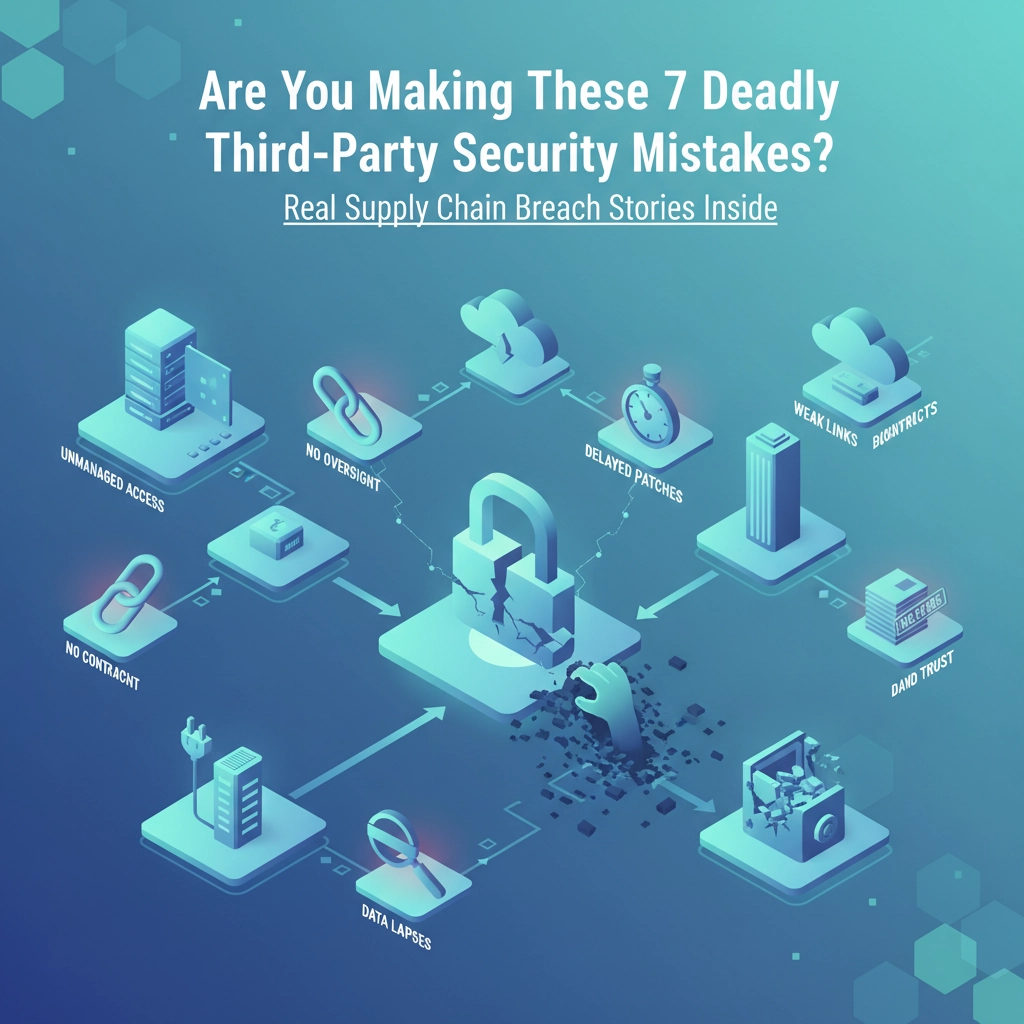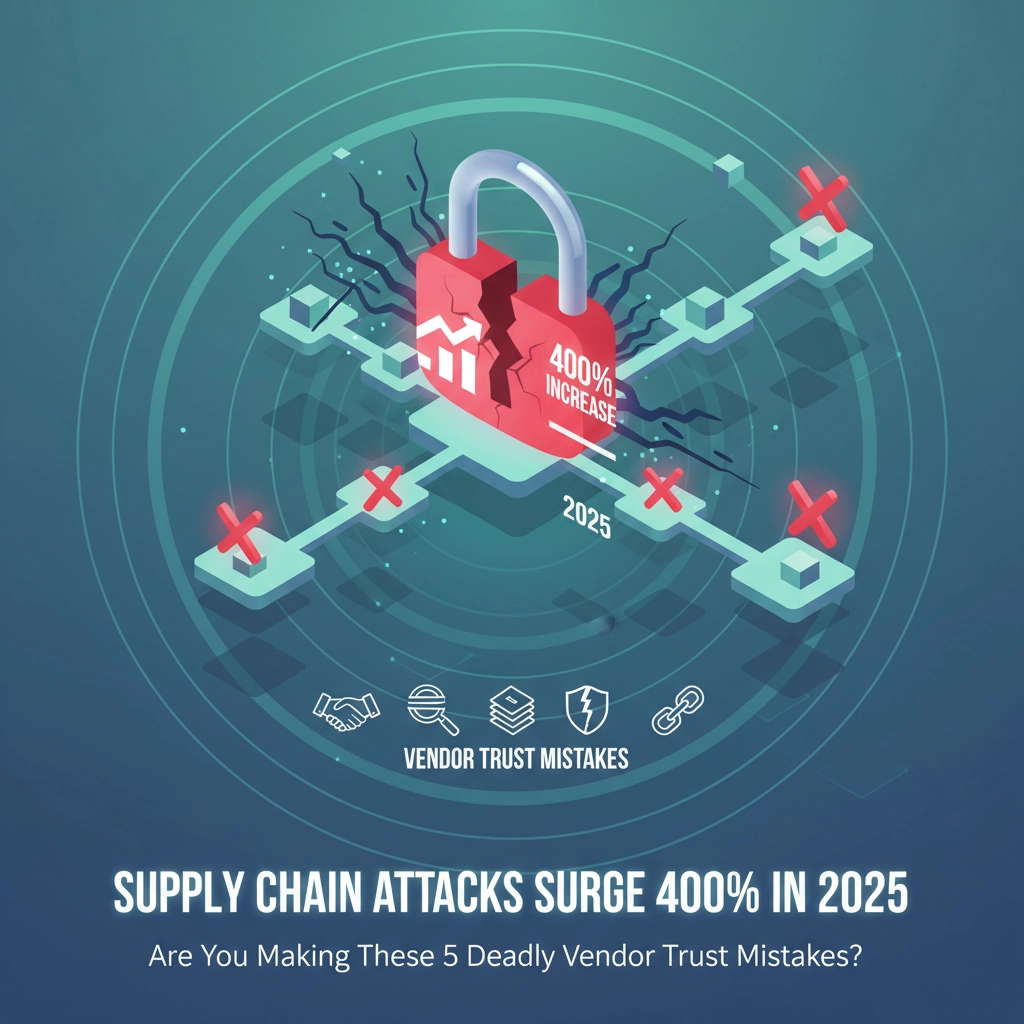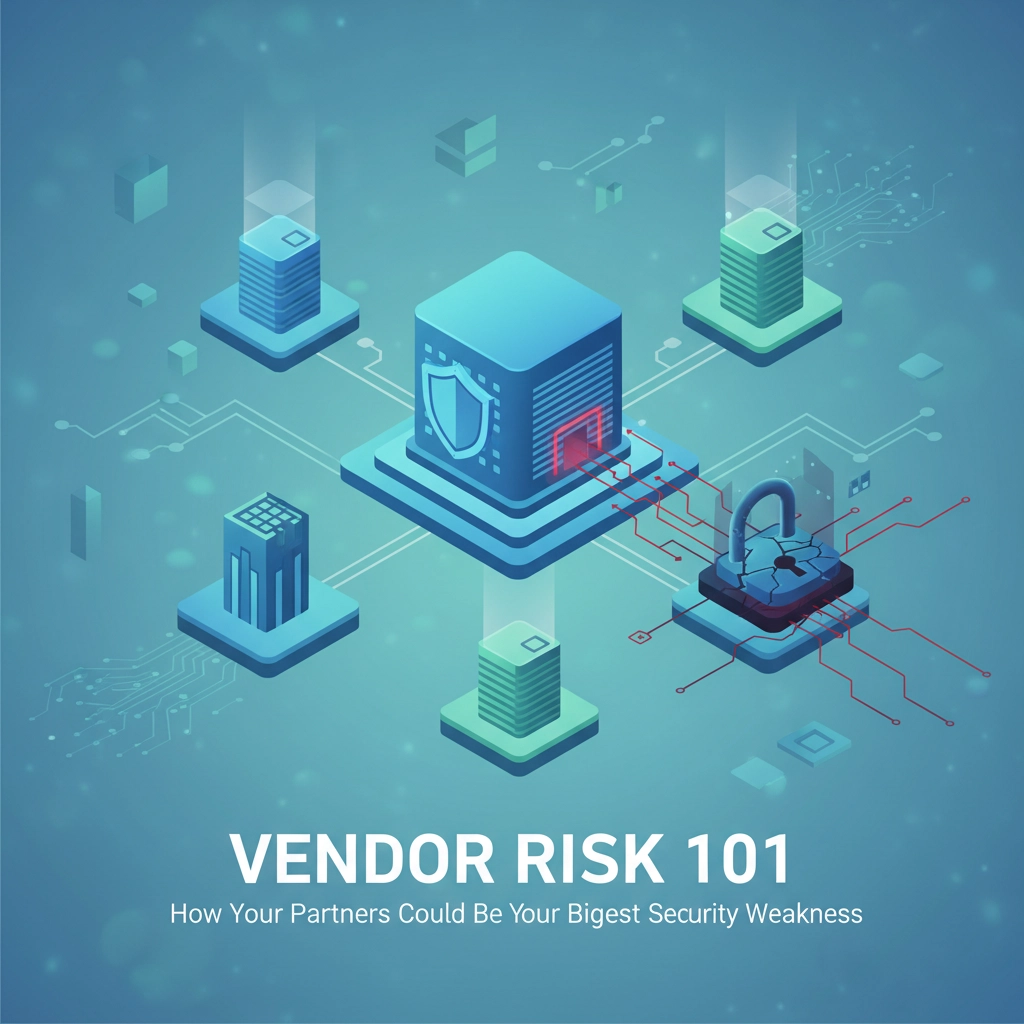
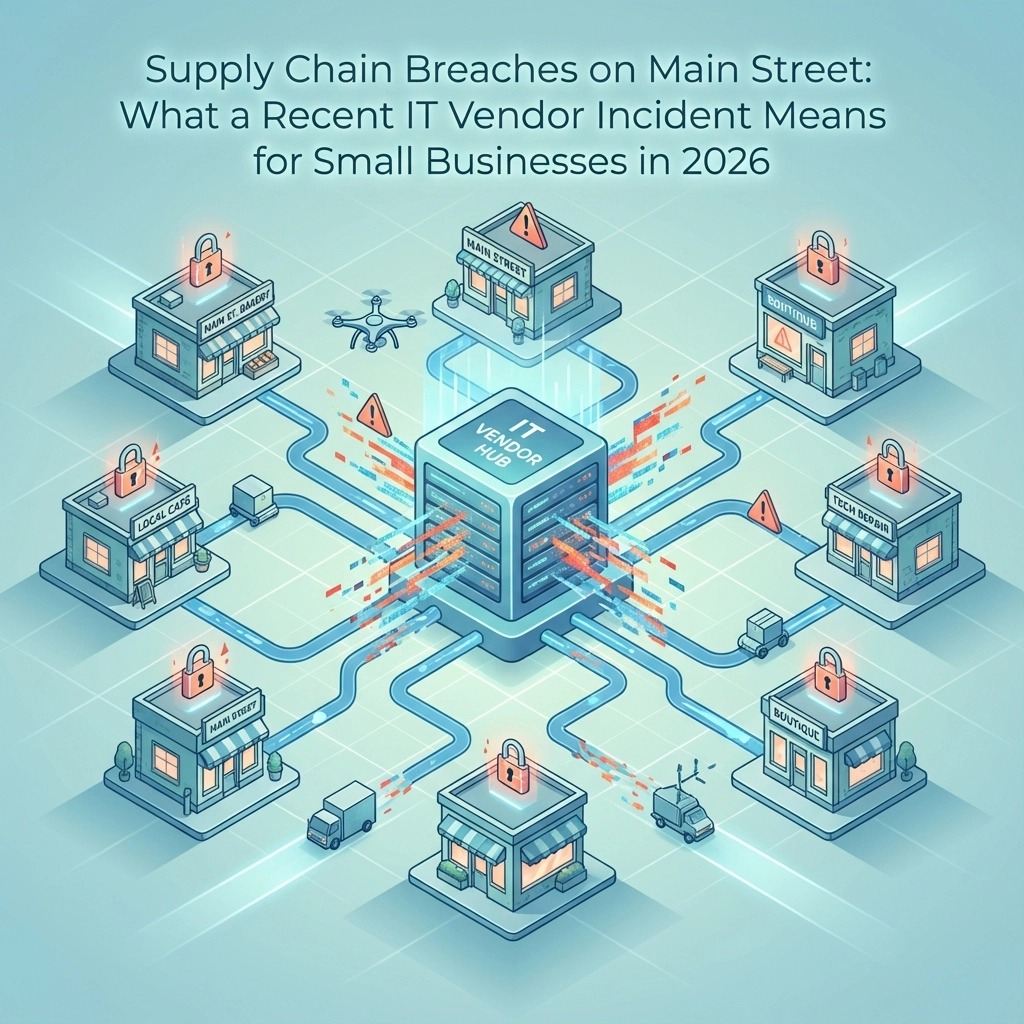
The cybersecurity landscape fundamentally shifted in 2025, and small businesses across America are paying the price. While headlines focus on major corporate breaches, a more insidious threat has emerged: supply chain attacks targeting the vendors and third-party services that small businesses depend on daily. Recent incidents demonstrate that your business security is only as strong as your weakest vendor: and that weakness is being systematically exploited.
Over 60% of data breaches now involve third parties, marking a dramatic increase from previous years. This isn't just a statistic: it represents a fundamental change in how cybercriminals operate. Rather than attempting direct attacks on well-defended targets, attackers have discovered it's far more efficient to breach a vendor and gain access to hundreds or thousands of customers simultaneously.
Understanding Supply Chain Attacks: The New Battlefield
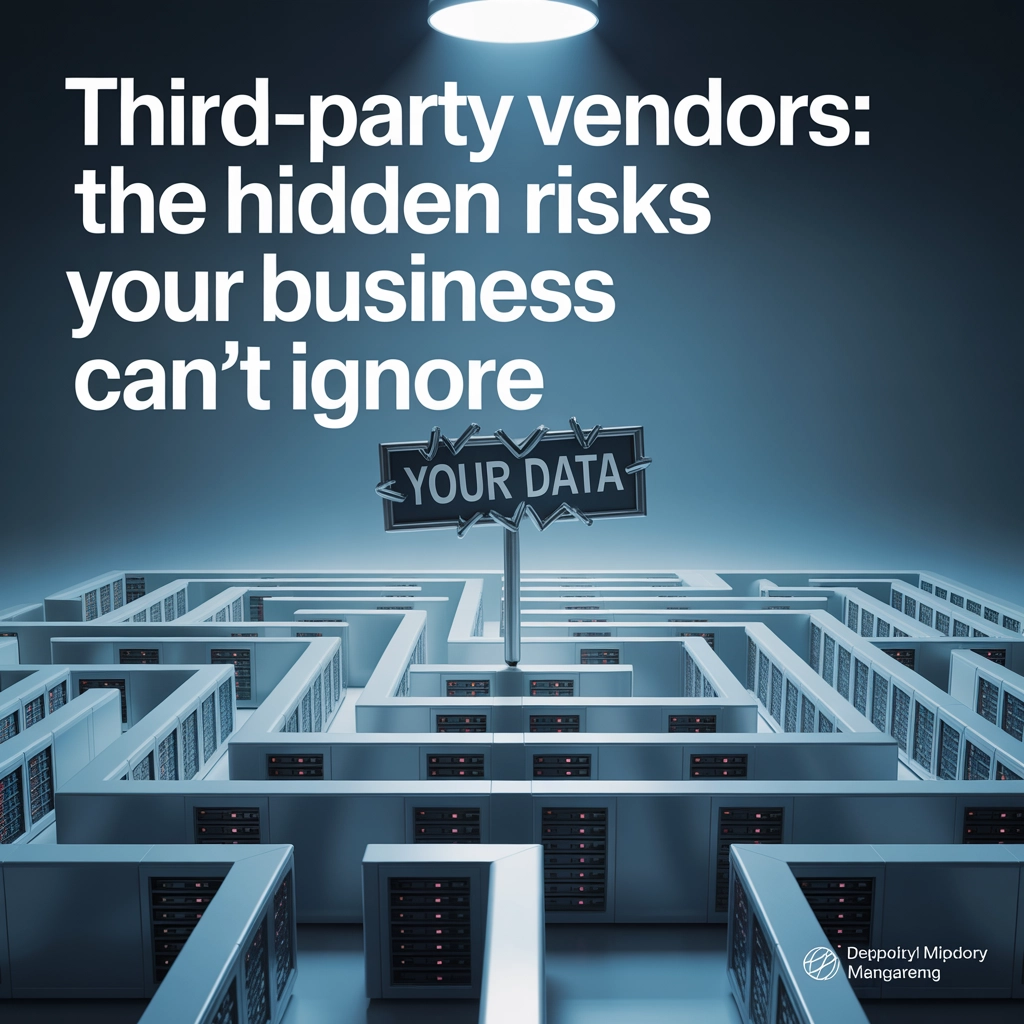
Supply chain attacks occur when cybercriminals infiltrate your business through a trusted third party. These attacks exploit the interconnected nature of modern business operations, where companies rely on dozens of vendors for everything from payroll processing to cloud storage, IT support, and software solutions.
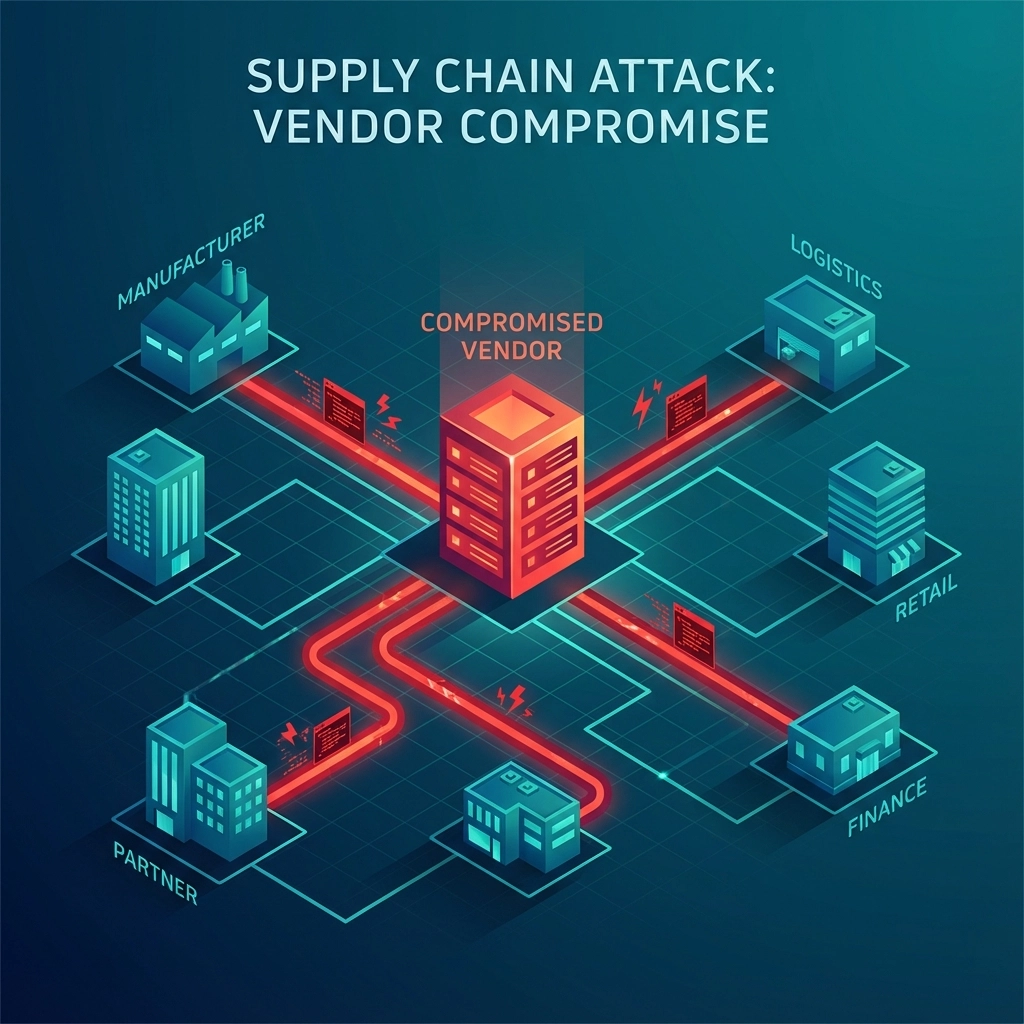
The attack strategy is deceptively simple: identify a vendor with weaker security measures, compromise their systems, and use that access to reach the vendor's customers. From the attacker's perspective, it's incredibly efficient. Instead of targeting individual businesses one at a time, they can breach a single vendor and potentially access hundreds of client systems simultaneously.
Consider the recent Qantas incident that exposed 5.7 million customer records: not through a direct attack on Qantas, but through a vulnerability in third-party software. This perfectly illustrates how your business can suffer a devastating breach without any failure in your own security systems.
Why Small Businesses Are Prime Targets
Small businesses face a perfect storm of vulnerabilities when it comes to supply chain security. Unlike large corporations with dedicated security teams and extensive vendor vetting processes, small businesses typically lack the resources to thoroughly evaluate every third-party relationship.
The numbers paint a stark picture: 43% of cyberattacks specifically target small businesses, and 81% of small businesses have suffered a security or data breach within the last year. More alarming still, 60% of small businesses that experience a cyber attack go out of business within six months.
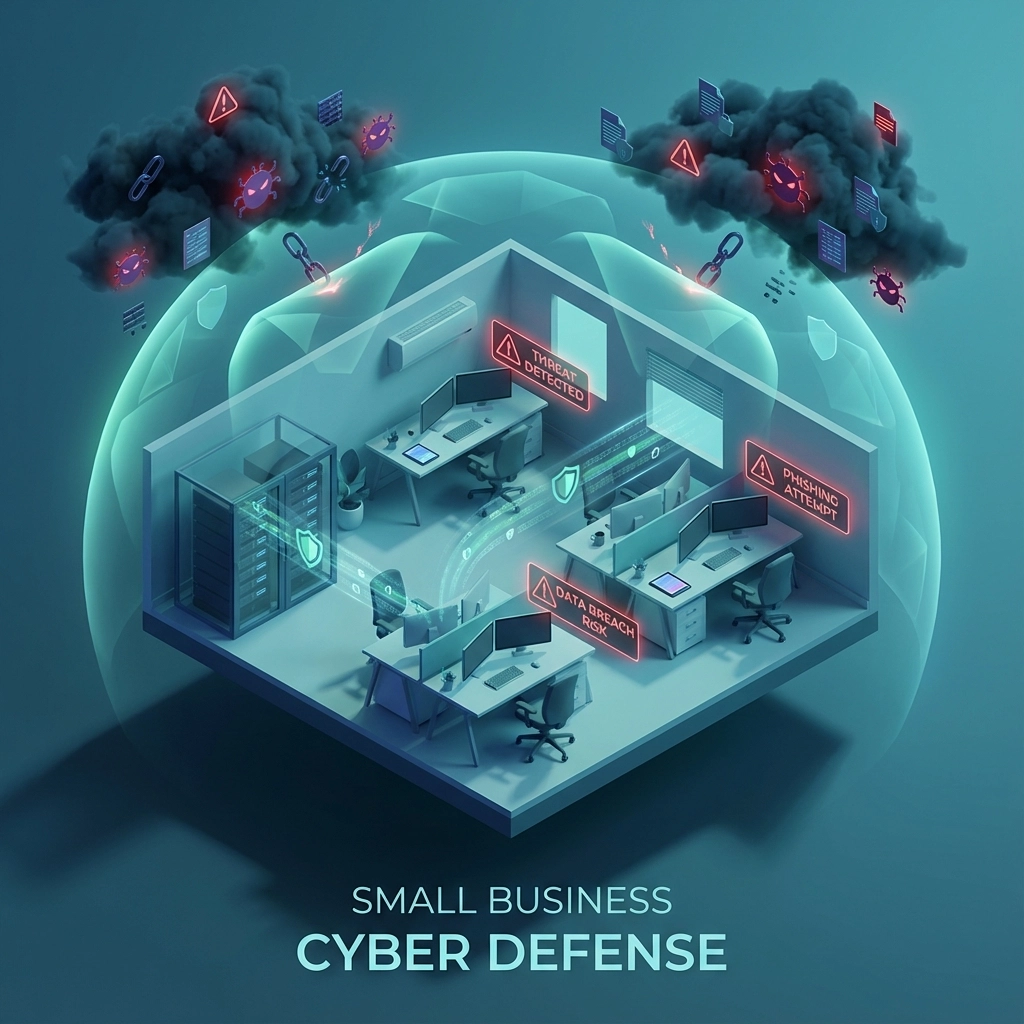
This targeting isn't accidental. Cybercriminals understand that small businesses often:
- Have limited cybersecurity expertise
- Rely heavily on third-party vendors for core business functions
- Lack formal vendor risk assessment processes
- Maintain fewer security controls and monitoring capabilities
- Cannot afford the same level of security infrastructure as larger companies
The average cost of a data breach for businesses under 500 employees has reached $3.31 million: a figure that would devastate most small operations.
The Vendor Trust Problem
Many small businesses operate on trust when it comes to vendor relationships. They assume that established companies provide adequate security, that compliance certifications guarantee protection, and that verbal assurances about data security are sufficient.
This trust-based approach is precisely what cybercriminals exploit. They target vendors who appear legitimate and trustworthy but maintain inadequate security practices. Once inside these vendor networks, attackers can access customer data, plant malware, establish persistent access points, and move laterally through connected systems.
The reality is that many vendors: particularly smaller IT service providers, software companies, and specialized service firms: lack robust cybersecurity measures. They may not have dedicated security staff, regular security assessments, or comprehensive incident response plans.
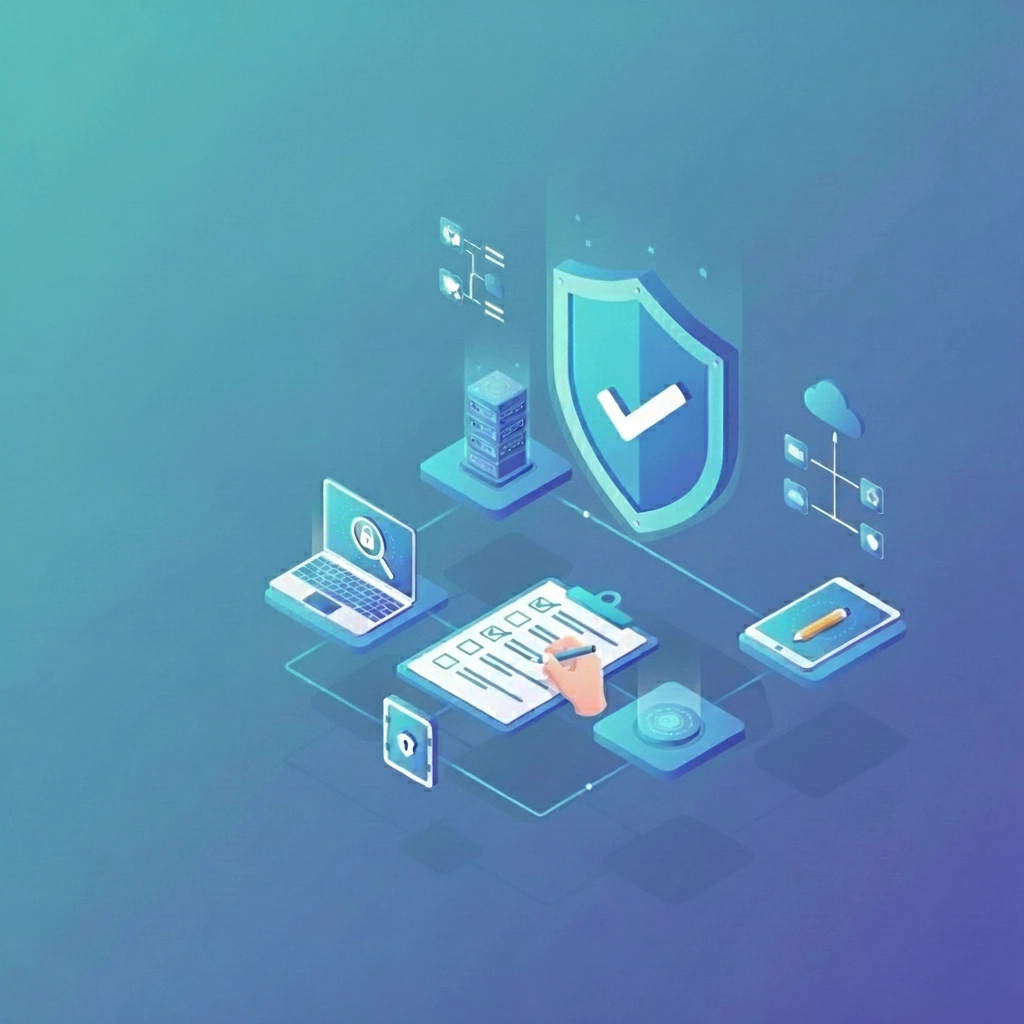
A Practical Vendor Security Checklist
Protecting your business requires a systematic approach to vendor risk management. Here's a practical checklist every small business should implement immediately:

Initial Vendor Assessment:
- Request current cybersecurity certifications (SOC 2, ISO 27001, etc.)
- Verify they maintain cyber liability insurance with adequate coverage
- Ask for references from similar businesses in your industry
- Confirm they conduct regular security audits and penetration testing
- Review their incident response plan and breach notification procedures
Ongoing Vendor Management:
- Establish minimum security requirements in all vendor contracts
- Require immediate notification of any security incidents
- Limit vendor access to only necessary systems and data
- Implement regular review cycles for vendor permissions
- Monitor vendor-related network activity for anomalies
Red Flags to Avoid:
- Vendors who cannot provide security documentation
- Companies that resist discussing their cybersecurity practices
- Providers who request excessive system access or administrative privileges
- Vendors with recent security incidents or poor security reputations
- Any provider who stores your data without clear security protocols
Immediate Cyber Hygiene Improvements
While comprehensive vendor risk management takes time to implement, several immediate actions can significantly reduce your supply chain risk exposure:
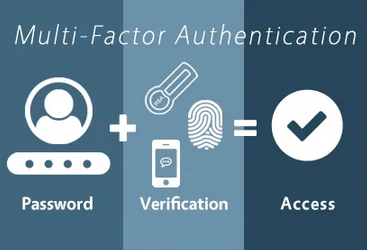
Access Control Overhaul: Conduct an immediate audit of all vendor access permissions. Remove any unnecessary access, implement time-limited permissions where possible, and ensure all vendor accounts use multi-factor authentication.
Network Segmentation: Isolate vendor access from your core business systems whenever possible. Create dedicated network segments for third-party connections to limit potential damage from a vendor compromise.
Data Classification: Identify what sensitive data each vendor can access and implement strict controls around that access. Consider whether vendors truly need access to sensitive information or if anonymized data would suffice.
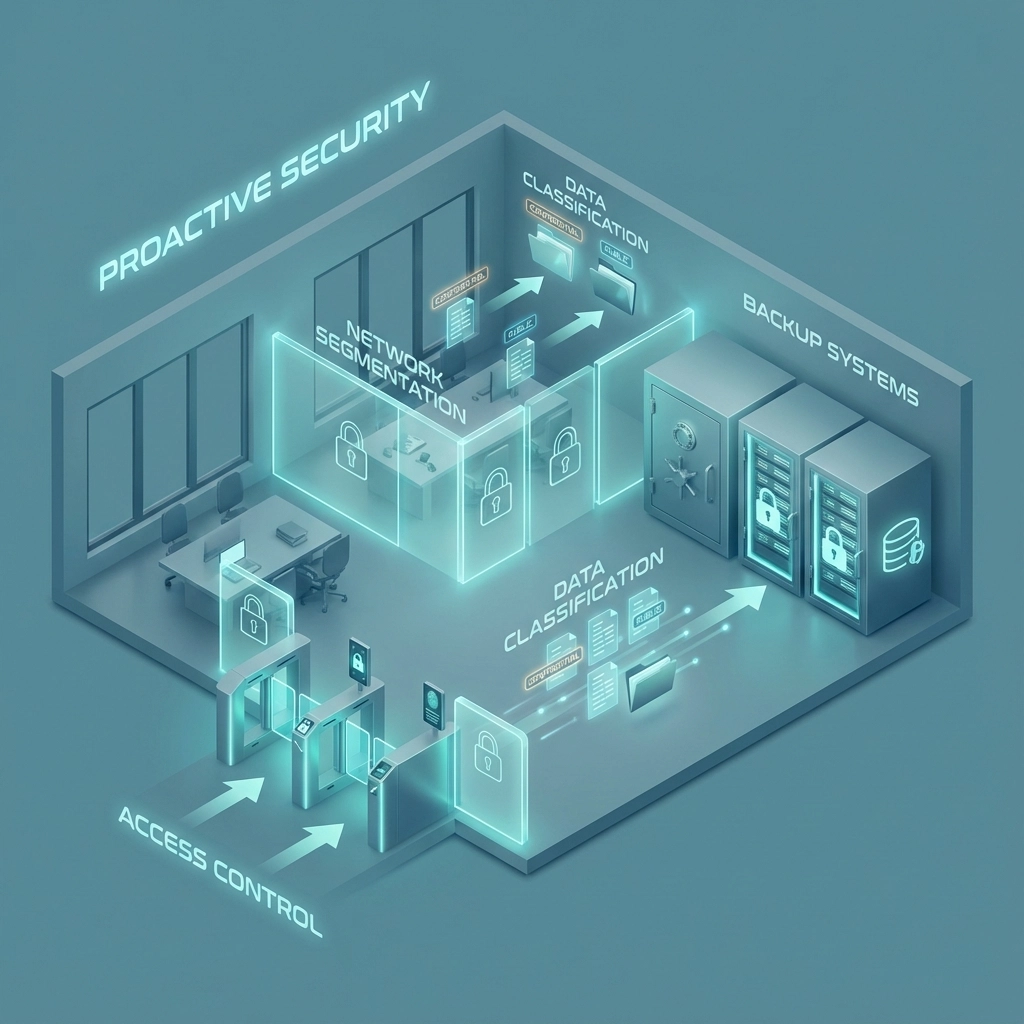
Backup Independence: Ensure your backup systems are independent of vendor access. Many supply chain attacks target backup systems to prevent recovery, so maintaining vendor-independent backup capabilities is crucial.
Incident Response Integration: Update your incident response plan to include vendor-related breach scenarios. Establish clear communication protocols with key vendors and ensure you can quickly isolate vendor access if necessary.
Why 2026 Demands Immediate Action
The cybersecurity threat landscape continues to evolve rapidly, and 2026 promises to bring even more sophisticated supply chain attacks. Several factors make immediate action critical:
Regulatory pressure is increasing, with new compliance requirements specifically addressing vendor risk management. Businesses that cannot demonstrate adequate third-party security controls may face significant penalties and audit failures.
Cyber insurance providers are tightening requirements around vendor risk assessment. Companies without formal vendor security programs may find coverage difficult to obtain or prohibitively expensive.

Customer expectations are rising as high-profile breaches increase awareness of supply chain vulnerabilities. Businesses that cannot demonstrate robust vendor security practices may lose competitive advantages and customer trust.
The sophistication of attacks continues to increase, with cybercriminals developing specialized tools and techniques specifically for supply chain exploitation. Traditional security measures are increasingly insufficient without comprehensive vendor risk management.
Building Long-Term Supply Chain Resilience
Effective supply chain security isn't a one-time project: it requires ongoing commitment and systematic processes. Start by documenting all current vendor relationships and their associated risk levels. Prioritize high-risk vendors for immediate security assessment and gradually expand your vendor security program.
Develop written policies for vendor selection, ongoing monitoring, and incident response. Train your team to recognize potential vendor-related security issues and establish clear escalation procedures.
Consider engaging cybersecurity professionals to help establish and maintain your vendor risk management program. The cost of professional assistance is minimal compared to the potential impact of a supply chain breach.
Remember that vendor security is ultimately about business continuity and customer trust. Companies that proactively address supply chain vulnerabilities position themselves for sustainable growth while those that ignore these risks face potentially catastrophic consequences.
The threat is real, immediate, and growing. But with proper planning and systematic implementation of vendor security controls, small businesses can effectively protect themselves from supply chain attacks while maintaining the vendor relationships essential to their operations.
Don't wait until you become the next cautionary tale. Take action now to secure your vendor relationships and protect your business from the supply chain threats that have already devastated too many small businesses across America.
Ready to strengthen your vendor security posture? Contact B&R Computers today for a complimentary vendor security assessment. We'll help you identify risks in your current vendor relationships and develop a practical plan to protect your business from supply chain threats in 2026 and beyond.