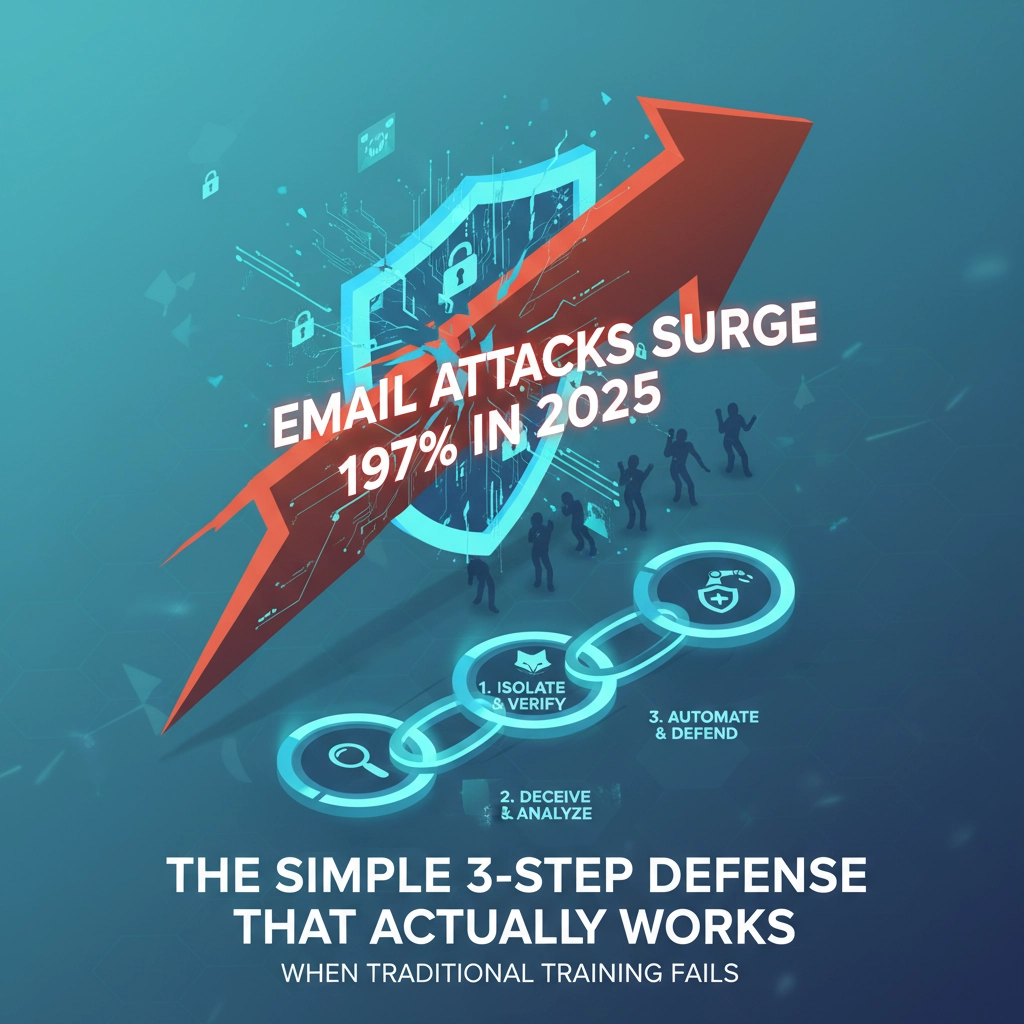
Let's be honest: your team thinks they're pretty smart about cybersecurity. They don't click suspicious links, they're careful with attachments, and they roll their eyes at those obvious "Nigerian prince" emails. Yet somehow, your cautious, well-trained employees are falling for a new type of attack at an alarming rate.
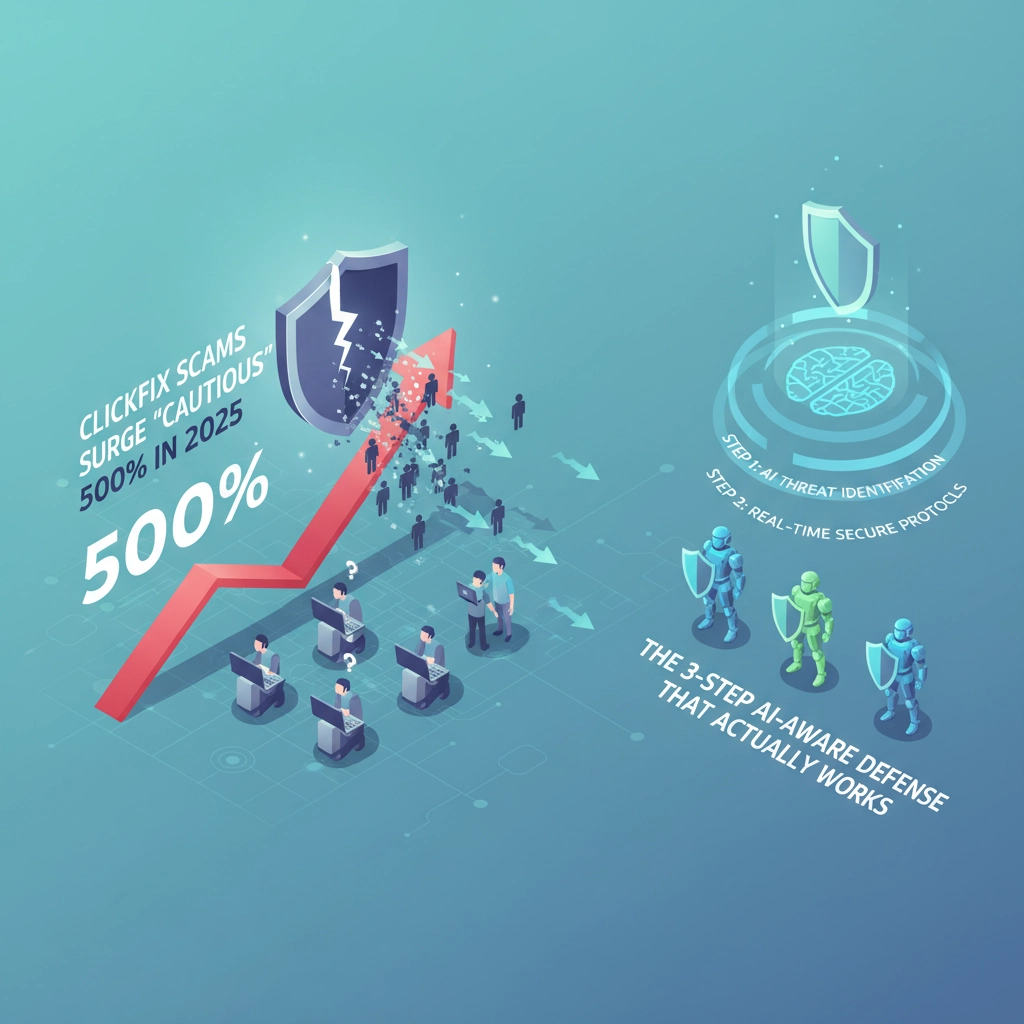
ClickFix scams have exploded by over 500% in the first half of 2025, making them the second most common attack vector after traditional phishing. These attacks now account for nearly 8% of all blocked cyber threats, and here's the kicker: they're fooling exactly the kind of employees you'd least expect.
What Makes ClickFix So Dangerously Effective
Unlike traditional phishing that tries to steal passwords or trick you into clicking malicious links, ClickFix attacks are psychological masterpieces. They present what appears to be a legitimate technical problem: maybe your browser crashed, there's a verification error, or a security warning popped up: and then helpfully provide step-by-step instructions to "fix" it.
The catch? Those helpful instructions involve copying and pasting malicious commands that install malware directly onto your system.

Here's a real-world example that fooled a marketing director at a $8M consulting firm last month: She received an email that appeared to be from her company's IT department, explaining that her browser had security vulnerabilities that needed immediate patching. The email included detailed, professional-looking instructions to open Command Prompt and run a specific command to "update security certificates."
The instructions were clear, the formatting looked official, and the sender appeared to be from internal IT. She followed the steps perfectly: and unknowingly installed ransomware that encrypted the company's entire client database.
Why Your "Careful" Team Is Vulnerable
The reason ClickFix attacks work so well isn't because people are careless: it's because they exploit our natural problem-solving instincts. When faced with what appears to be a technical issue, most employees want to fix it quickly rather than bother IT with "minor" problems.
ClickFix succeeds because it:
- Looks legitimate: The fake error messages are increasingly sophisticated, often mimicking real system notifications
- Feels helpful: Victims believe they're being proactive by following the "solution"
- Bypasses security training: Traditional awareness training focuses on "don't click suspicious links," but ClickFix victims aren't clicking: they're typing commands they think will help
- Exploits time pressure: Many attacks create artificial urgency ("Your account will be locked in 15 minutes unless…")
State-sponsored groups from Iran, North Korea, and Russia have all adopted ClickFix tactics, and threat actors are now selling ready-made ClickFix toolkits to less sophisticated criminals. This isn't going away: it's becoming the new standard.
The AI Amplification Problem
What's making ClickFix attacks exponentially more dangerous in 2025 is artificial intelligence. AI tools are helping attackers create hyper-realistic fake error messages, perfectly formatted "official" communications, and believable technical explanations that would fool even experienced IT professionals.
AI-generated phishing pages can now mimic legitimate company portals with pixel-perfect accuracy, complete with correct logos, fonts, and even recent company news references. When someone receives a ClickFix attack that references their actual software versions, company policies, or recent IT announcements, the authenticity becomes nearly impossible to question.

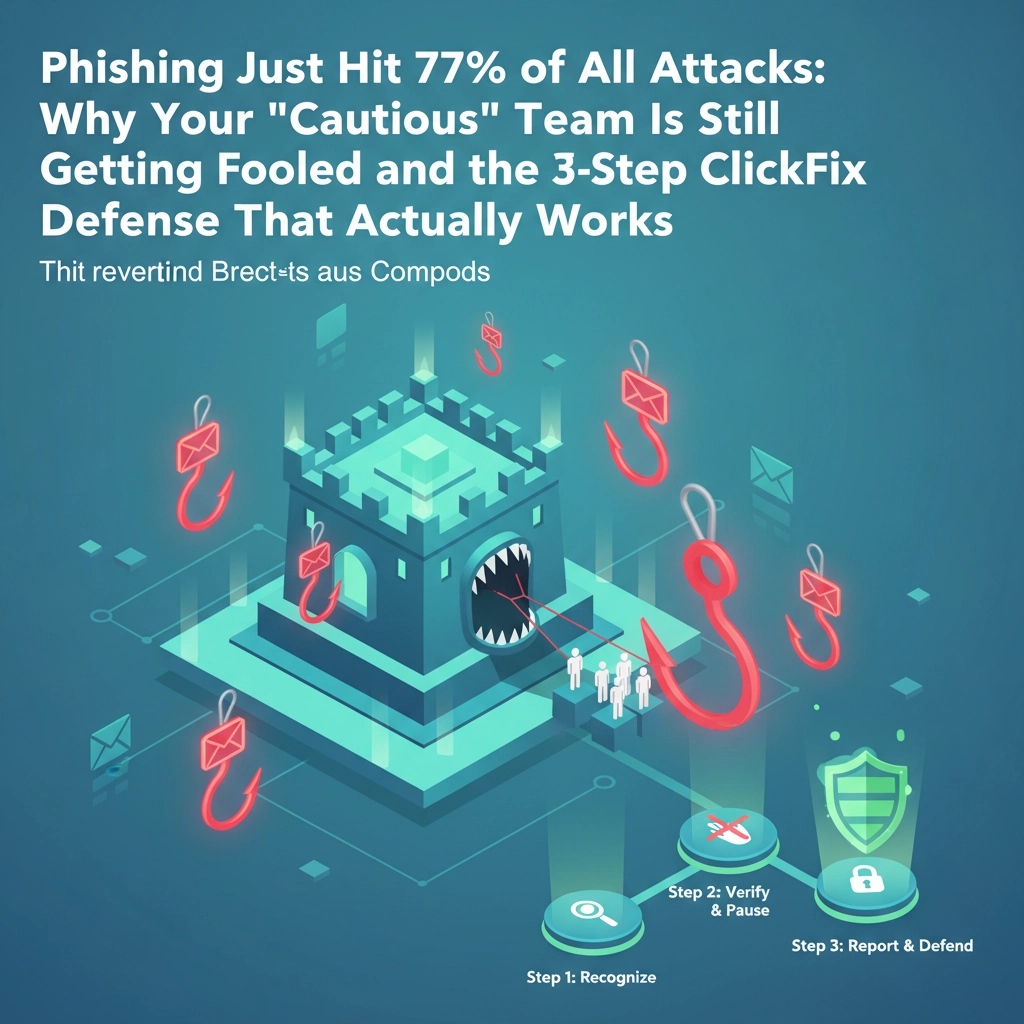
The 3-Step AI-Aware Defense That Actually Works
Traditional security awareness training isn't enough anymore. You need a modern defense strategy that acknowledges how sophisticated these attacks have become. Here's the framework that's proving effective for businesses like yours:
Step 1: Deploy AI-Powered Detection and Filtering
The first line of defense is stopping ClickFix attacks before they reach your employees' inboxes. Modern AI-based email security solutions can identify the subtle patterns that indicate ClickFix attempts: unusual command structures, social engineering language patterns, and suspicious formatting combinations that human reviewers might miss.
But here's what most businesses get wrong: they rely solely on perimeter detection. Smart companies are implementing AI-powered endpoint monitoring that can identify when suspicious commands are being executed, even if the initial email slipped through. This creates a safety net for when (not if) the first layer fails.
Step 2: Proactive Employee Testing and Continuous Education
Forget annual security training videos. The businesses successfully defending against ClickFix attacks are implementing continuous, realistic testing programs. This means sending simulated ClickFix attempts to employees monthly: not to catch them making mistakes, but to build pattern recognition.
The key is making these simulations indistinguishable from real attacks. When an employee encounters a legitimate ClickFix attempt, their brain should immediately recognize the pattern: "Wait, this looks exactly like that test we got last month."
Effective programs also focus on building the right reflexes. Instead of just teaching "don't do this," successful training emphasizes "when you see this, immediately do that": specifically, forward the suspicious communication to IT and wait for verification before taking any action.

Step 3: Instant Breach Response Protocols
Even with perfect detection and training, some ClickFix attacks will succeed. The businesses that minimize damage have predetermined response protocols that activate the moment a potential compromise is detected.
This isn't about having an incident response plan sitting in a binder somewhere. This means having automated systems that can immediately isolate compromised endpoints, notify the security team, and begin forensic data collection within minutes of detection.
The most effective approach includes behavioral monitoring that can identify when legitimate user credentials are being used in suspicious ways: a common result of successful ClickFix attacks. AI-powered user behavior analytics can spot when someone's normal work patterns suddenly include unusual file access, network connections, or system modifications.
Why Traditional Approaches Fall Short
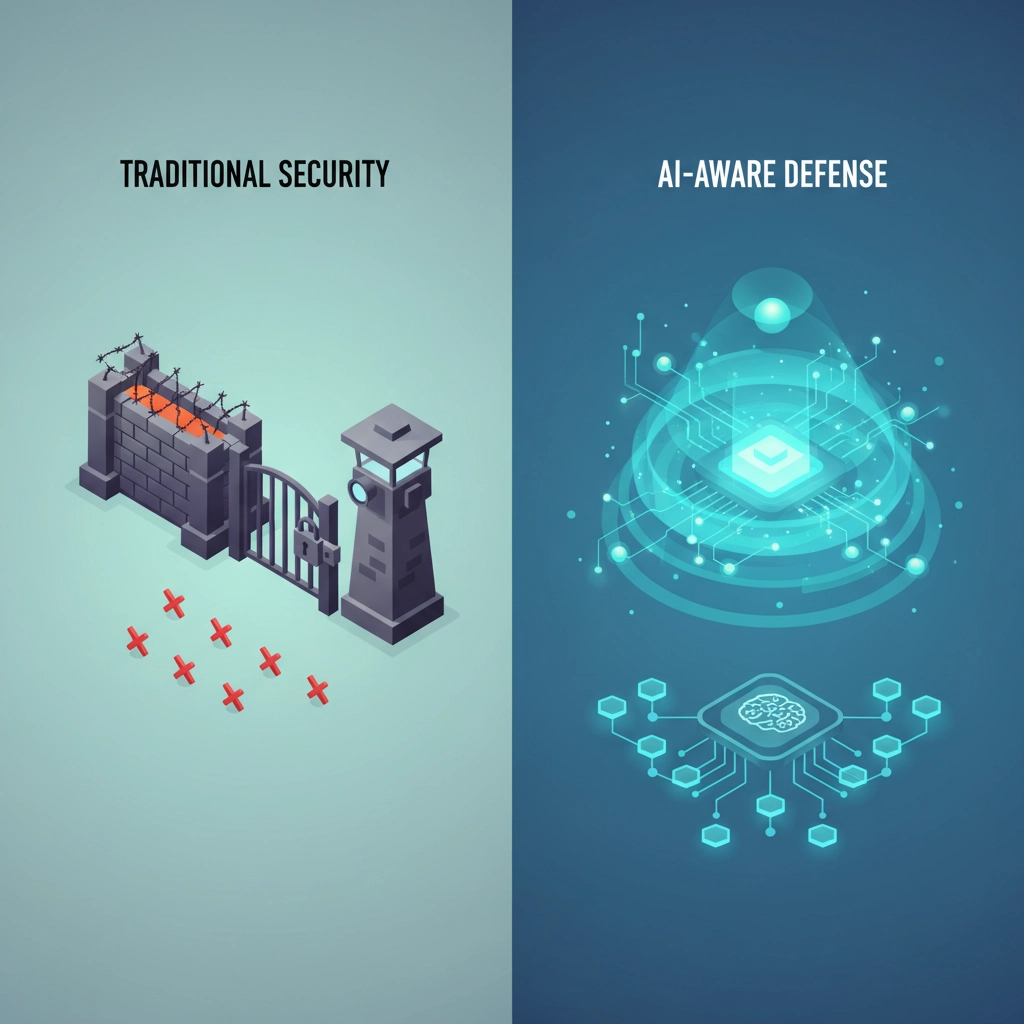
Most companies are still fighting ClickFix attacks with outdated strategies. They're telling employees to "be more careful" or "think before you click," but ClickFix doesn't require clicking anything suspicious. Victims are following what appears to be helpful technical guidance.
The fundamental problem is that traditional security training assumes attackers are trying to trick you into doing something obviously wrong. ClickFix attackers are trying to trick you into doing something that seems right: fixing a problem that appears to need fixing.
This is why businesses that succeed against ClickFix attacks focus on verification protocols rather than detection skills. They train employees to recognize situations that require IT verification, not just suspicious-looking emails.
Building Your Defense Strategy
The most important shift successful businesses make is treating ClickFix defense as an organizational behavior change, not just a technology problem. This means creating a culture where employees are rewarded for escalating potential security issues rather than trying to solve them independently.
At B&R Computers, we've seen firsthand how businesses transform their security posture by implementing comprehensive ClickFix defense strategies. The companies that successfully defend against these attacks don't just invest in better technology: they invest in building better security instincts across their entire organization.
Taking Action Before It's Too Late
ClickFix attacks are succeeding because they're exploiting the gap between traditional security training and modern attack sophistication. The businesses that thrive in 2025 are those that acknowledge this reality and build defenses accordingly.
The three-step framework: AI-powered detection, continuous employee education, and instant response protocols: isn't just theoretical. It's the practical approach that businesses are using right now to defend against the fastest-growing cyber threat of 2025.
Your employees aren't getting fooled because they're careless. They're getting fooled because attackers have gotten better at looking legitimate. The solution isn't hoping your team gets better at spotting fakes: it's building systems that assume fakes will always be convincing and creating verification processes that work regardless of how realistic the deception appears.
Don't wait until your cautious, well-trained team becomes the next ClickFix statistic. The time to build modern defenses is now, before the attackers get even better at what they're already doing remarkably well.
Ready to assess your organization's vulnerability to ClickFix attacks? Contact B&R Computers today to discuss how our AI-aware security strategies can protect your business from the cyber threats that traditional defenses miss.