
Why Your WISP Isn't Just a Document: The Compliance Trap for Tax Professionals
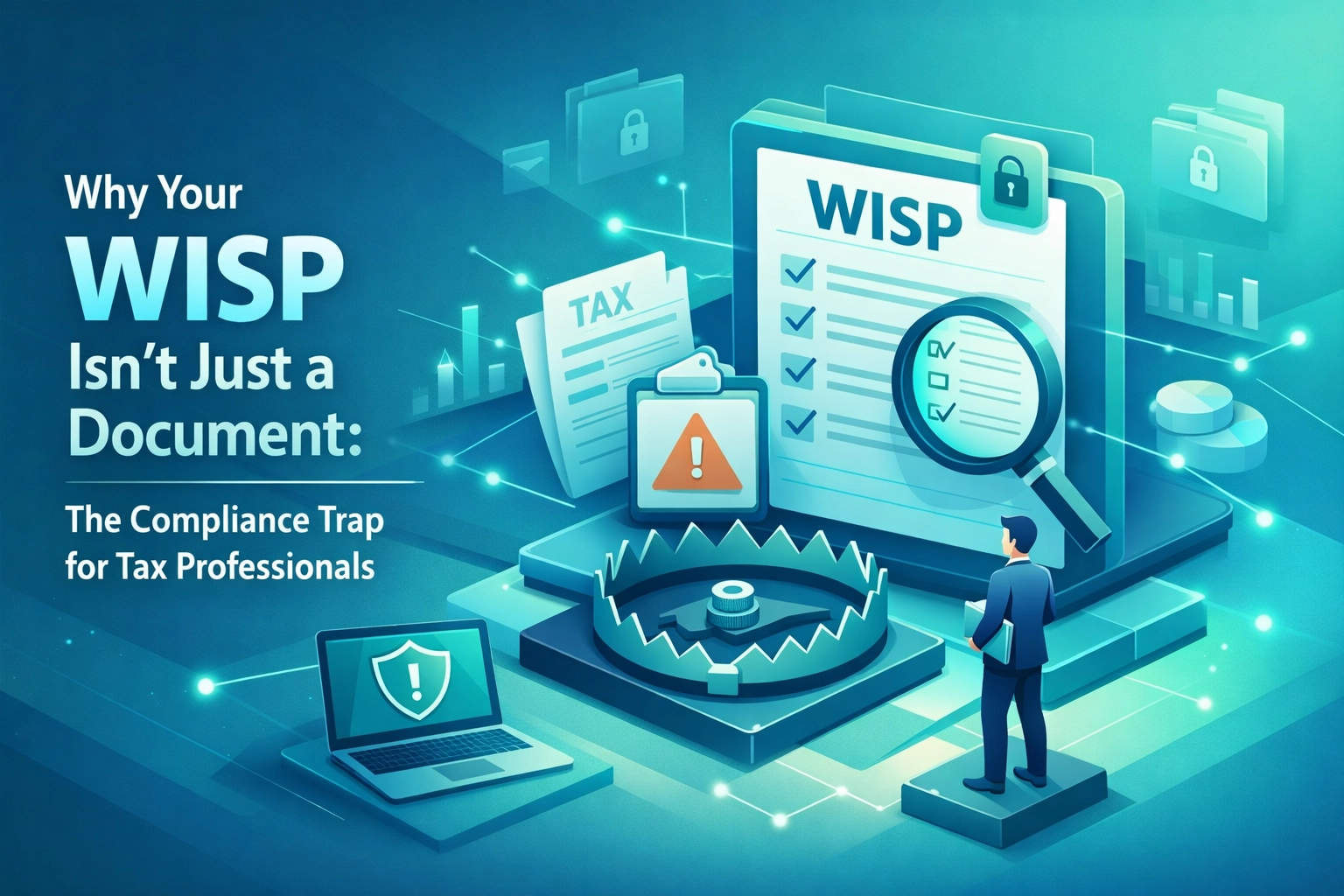
Most tax professionals have a Written Information Security Plan. They downloaded a template, filled in some blanks, and filed it away. When regulators ask, they can produce it. Problem solved, right?
Not even close.
The gap between having a WISP and actually implementing one is where tax firms get into serious trouble. This isn't about theoretical risk: it's about enforcement actions, suspended e-file provider status, and professional consequences that can shut down your practice.
The Federal Requirement Isn't Optional
The FTC Safeguards Rule applies directly to tax preparers who handle consumer financial information. If you prepare tax returns, you're covered. The rule doesn't just require that you have a written plan: it mandates specific operational safeguards to protect client data.
The IRS reinforces this requirement. Professional tax preparers must maintain a WISP and report data theft and security incidents. When you renew your PTIN, Question 11 asks you to confirm you have an information security plan in place. Checking that box without actually implementing your WISP isn't just negligent: it's perjury under penalty of law.
This matters because falsely claiming compliance can result in PTIN termination or license revocation. The regulatory framework treats WISP compliance as a legal obligation, not a best practice you can work toward when convenient.

Why Templates Don't Equal Compliance
A WISP template gives you structure. It doesn't give you security.
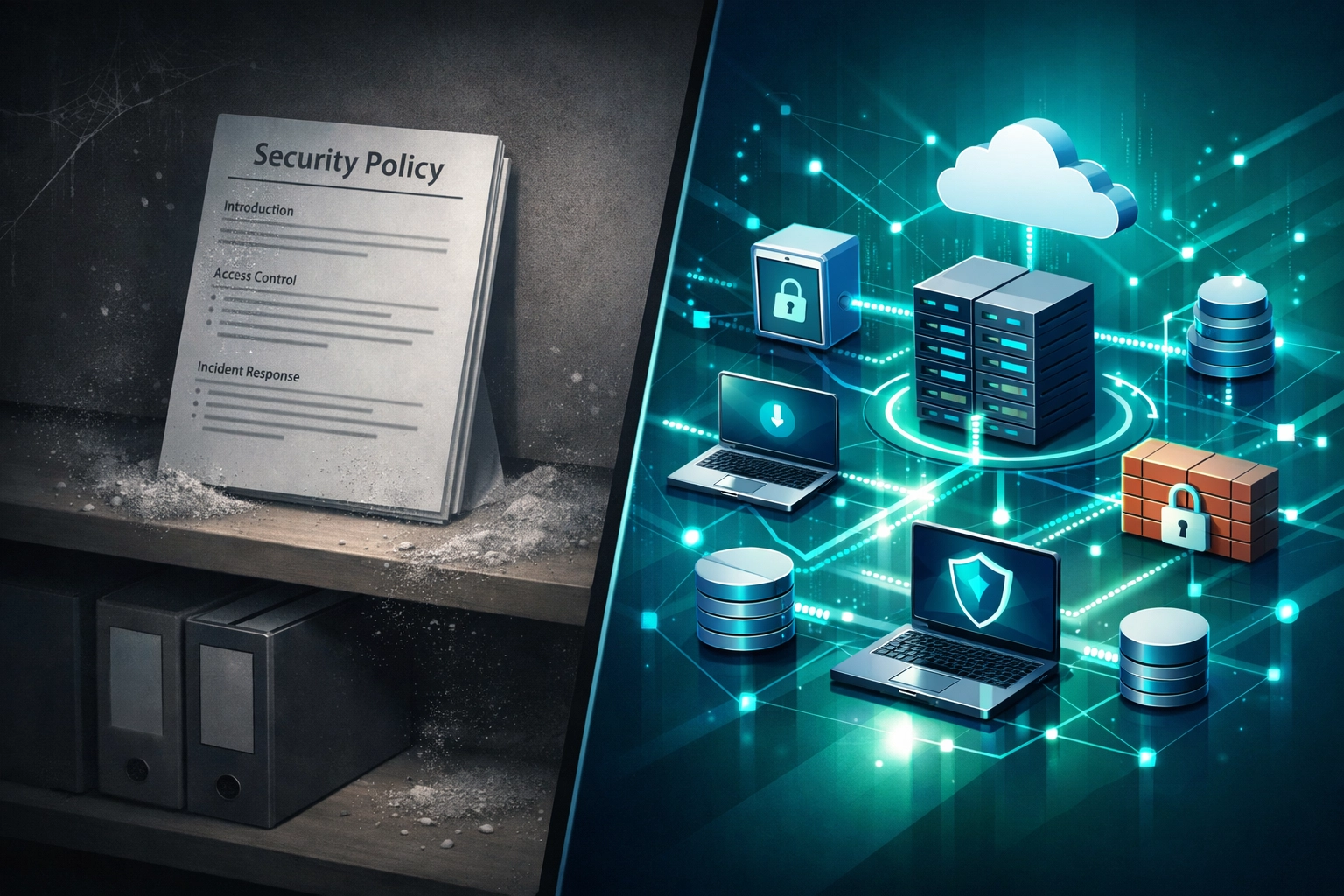
The compliance trap emerges when firms confuse documentation with implementation. You can have a perfectly formatted 30-page document outlining encryption protocols, access controls, and incident response procedures. But if your staff is still emailing unencrypted tax returns to clients, you're not compliant: you're just well-documented in your non-compliance.
Information security only works when three elements align: written policies, technical systems, and staff behavior. Most firms nail the first element and ignore the other two.
Consider what actual WISP implementation requires:
Daily operational practices that match your documented procedures. If your WISP says client data is encrypted at rest, every device storing that data must actually be encrypted. If it says employees complete security awareness training, you need training records proving it happened.
Identified and secured data repositories. You can't protect data you haven't inventoried. Where does client information live in your practice? Cloud storage, local servers, employee laptops, external drives, email archives? Each location is a secured asset requiring specific controls.
Verified employee compliance. Security policies only work if staff follow them. This means monitoring whether employees actually use strong passwords, recognize phishing attempts, and handle client data according to your procedures.
Regular testing and updates. Threats evolve. Your WISP must evolve with them through ongoing risk assessments and security testing.
The Real Consequences of Paper Compliance
Enforcement isn't theoretical. Regulatory agencies actively investigate data security practices in tax firms, particularly after breaches. When they do, they don't just check whether you have a WISP: they evaluate whether your operations match what that document claims.
The consequences of failing this test include:
Loss of IRS e-file provider status. Without the ability to file electronically, you can't efficiently serve clients. This single consequence can effectively end a modern tax practice.
Federal penalties under the FTC Safeguards Rule. Financial penalties scale with the severity and duration of non-compliance.
State-level sanctions. Many states have their own data security requirements for tax professionals, adding another layer of potential penalties.
Insurance coverage denial. Cyber liability policies typically require documented security controls. If a breach occurs and your insurer discovers your WISP was never implemented, they may deny your claim entirely.
Professional reputation damage. Client data breaches make headlines. The loss of trust extends beyond the affected clients: potential clients searching for tax professionals will find news of your security failure.
What Tax Firms Actually Need to Do
Stop treating your WISP as a document you create once and forget. Treat it as the operational backbone of your data security program.
Conduct Annual Risk Assessments
Your risk profile changes every year. New technology introduces new vulnerabilities. Staff turnover creates gaps in security knowledge. Client data expands across new platforms and systems.
A meaningful risk assessment identifies where client data lives, who can access it, what threats could compromise it, and which safeguards are working. Document this assessment and use it to update your security controls and your WISP.
Implement Formal Employee Training
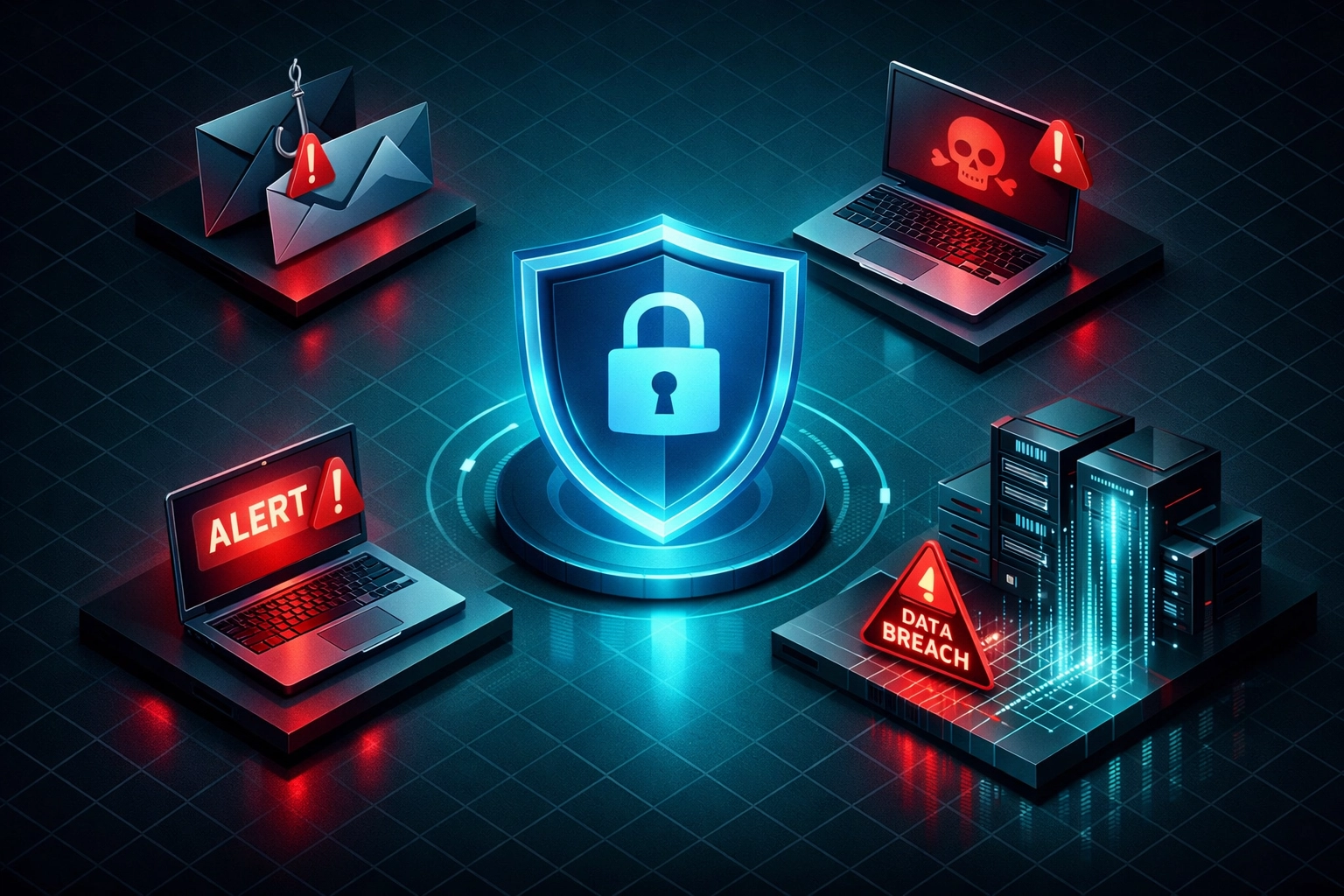
Phishing remains the most common attack vector against tax firms. Cybercriminals know tax season means rushed employees handling massive volumes of sensitive data: the perfect conditions for social engineering attacks.
One employee clicking a malicious link can compromise your entire client database. Training can't be an annual PowerPoint presentation everyone clicks through without reading. Effective security awareness training includes:
- Regular phishing simulations to test and reinforce learning
- Specific scenarios relevant to tax professionals (fake IRS emails, client impersonation, fake tax software updates)
- Immediate feedback when employees fail tests
- Documentation proving each employee completed training
Encrypt Everything
Client tax returns contain everything criminals need for identity theft: Social Security numbers, income details, bank account information, dependent data. This information must be encrypted both at rest and in transit.
At rest means data stored on servers, workstations, laptops, external drives, and cloud platforms. If a device is stolen, encryption renders the data useless to thieves.
In transit means data moving between locations: from your office to the cloud, from your network to a client's email, from your laptop to your smartphone. Never email unencrypted tax documents. Use secure client portals or encrypted file transfer services.
Designate a Qualified Security Coordinator
The FTC Safeguards Rule requires firms to designate a qualified individual to oversee their information security program. This person doesn't need to be a cybersecurity expert, but they need sufficient authority and resources to implement and maintain your WISP.
This role includes monitoring compliance, coordinating security testing, managing employee training, updating policies as threats evolve, and serving as the point of contact for security incidents.
The Living Document Mindset
Your WISP should change when your practice changes. Adding cloud-based tax software? Update your WISP to address cloud security controls. Hiring new staff? Update access control procedures. Experiencing a near-miss security incident? Document what happened and what you changed to prevent recurrence.
This living document approach serves two purposes. First, it keeps your security controls aligned with actual risks. Second, it creates the evidence trail regulators look for when evaluating your compliance.
When regulatory agencies investigate, they want to see version history, update logs, risk assessments, training records, and incident documentation. A static document created years ago and never updated signals paper compliance, not real security.
Beyond Compliance: Practical Protection
The regulatory framework exists because tax professionals are high-value targets. Your clients trust you with their most sensitive financial information. Cybercriminals know this and actively target tax firms, especially during tax season when workloads are highest and stress levels peak.
Real security protects your clients, preserves your professional reputation, and ensures business continuity. Compliance follows naturally when you implement effective security controls.
The firms that succeed are those that stop thinking about their WISP as a regulatory burden and start thinking about it as an operational playbook for protecting the practice they've built.
Get Your WISP Working for You
If you're treating your WISP as a document that sits in a drawer until someone asks for it, you're exposed. The gap between paper compliance and operational security is where practices get into trouble: and where attackers succeed.
B&R Computers specializes in helping tax professionals build and maintain security frameworks that go beyond simple compliance to provide real-world protection. We work with accounting firms to conduct risk assessments, implement technical controls, train employees, and turn static WISPs into living security programs that actually protect client data.
Your WISP should be your strongest defense, not your biggest liability. Let's make it work the way it should.