
The TriZetto Breach: 3.4 Million Reasons to Audit Your Healthcare IT Vendors
For healthcare providers, the security of patient data is a primary pillar of trust. However, as the industry becomes increasingly digitized, that trust is no longer solely in the hands of the physicians or the hospital administrators. It rests in the hands of third-party IT vendors.
The recent breach of TriZetto Provider Solutions, a subsidiary of the global IT giant Cognizant, serves as a stark reminder of this reality. With 3.4 million patient records compromised, the incident underscores a critical vulnerability in the healthcare ecosystem: the third-party supply chain. If your practice or facility relies on external platforms for insurance eligibility, billing, or records management, the TriZetto breach is not just a news story: it is a directive to overhaul your vendor management strategy.
The Anatomy of the TriZetto Breach
TriZetto is a cornerstone of healthcare infrastructure in the United States. Serving approximately 200 million people across 875,000 healthcare providers, its software is the "connective tissue" that allows doctors’ offices to verify insurance eligibility and process medical treatments.
According to reports, unauthorized actors gained access to a TriZetto web portal beginning in November 2024. The breach remained undetected for nearly a year, only being discovered on October 2, 2025. This 11-month "dwell time": the duration a hacker remains inside a system before being caught: allowed for the systematic extraction of sensitive data belonging to millions of individuals.
What Was Exposed?
The data stolen in this breach is particularly valuable on the dark web because it combines Personal Identifying Information (PII) with Protected Health Information (PHI). The compromised data includes:
- Full names and home addresses
- Dates of birth
- Social Security numbers (SSNs)
- Medicare beneficiary identifiers
- Health insurance member numbers
- Provider names and demographic information
While Cognizant has stated that bank account and payment card information were not affected, the exposure of Medicare IDs and SSNs provides bad actors with everything they need to commit long-term medical identity theft and insurance fraud.

The 11-Month Gap: A Failure of Monitoring
The most alarming aspect of the TriZetto incident is the timeline. Hackers maintained access to the web portal from late 2024 through nearly the end of 2025. In the world of cybersecurity, detection is just as important as prevention.
For healthcare providers, this highlights a massive risk. You may have the most robust internal firewalls and advanced antivirus solutions, but if your data is being fed into a third-party portal that isn't being monitored for suspicious activity, your patients are at risk.
The delay didn't end with detection. While the breach was identified in October 2025, affected providers weren't notified until December, and patients didn't start receiving letters until February 2026. This lag puts the burden of defense on the healthcare providers, who must now answer to frustrated patients and potential legal scrutiny.
The Domino Effect on Healthcare Providers
When a vendor like TriZetto or Change Healthcare (which suffered a massive attack earlier in 2024) is hit, the provider is the one left holding the bag. Under HIPAA, healthcare providers are responsible for the privacy and security of PHI, even when it is in the hands of a Business Associate.
While a Business Associate Agreement (BAA) provides a legal framework for liability, it does not stop the reputational damage or the operational chaos that follows a breach. Class-action lawsuits are already being filed against Cognizant, but the clinics and hospitals involved must also navigate the fallout of lost patient trust and potential regulatory audits.
Why Web Portals are the New Front Line
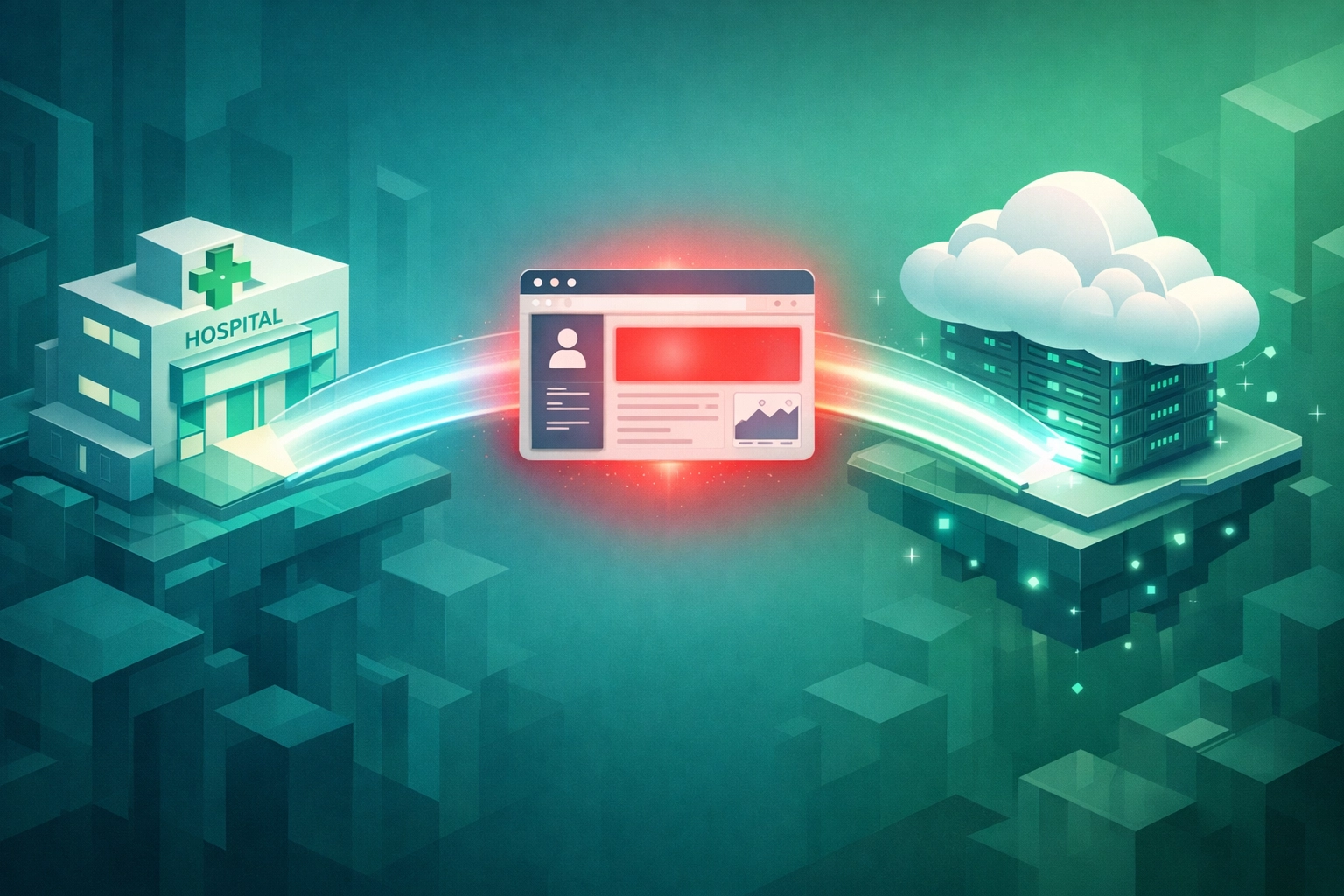
The TriZetto breach specifically targeted a web portal used for insurance eligibility verification. These portals are often the "weakest link" because they sit at the intersection of multiple networks.
Hackers target these portals because they offer a path of least resistance. Instead of trying to break into a heavily fortified hospital network, they target the third-party tool that the hospital uses every day. This is why securing everyday tools and auditing the platforms your team logs into is no longer optional.
The Necessity of Third-Party Risk Management (TPRM)
The scale of this breach proves that "trusting" your big-name vendors is not a security strategy. Healthcare businesses must implement a rigorous Third-Party Risk Management (TPRM) framework.
TPRM is the process of identifying, assessing, and controlling risks that arise from your relationships with external service providers. It involves moving beyond the BAA and actually verifying the security posture of your partners.
How to Audit Your Healthcare IT Vendors
If you are a healthcare administrator or practice owner, you should conduct regular audits of your technology partners. Here are the critical areas to evaluate:
- Request SOC 2 Type II Reports: Don’t just ask if a vendor is "secure." Ask for their latest SOC 2 Type II report. This document provides independent evidence that the vendor has maintained effective security controls over a period of time, rather than just a single point in time.
- Verify Data Encryption Standards: Ensure that data is encrypted both at rest and in transit. Specifically, ask how they handle Medicare identifiers and SSNs.
- Inquire About Dwell Time Reductions: Ask the vendor about their Mean Time to Detect (MTTD). If they cannot tell you how they would identify an unauthorized user in their portal within minutes or hours, they are not monitoring their systems effectively.
- Review Incident Response Plans: Does the vendor have a contractual obligation to notify you of a breach within 24–48 hours? The months-long delay in the TriZetto case is unacceptable in a modern threat environment.
- Assess Access Controls: Does the vendor require Multi-Factor Authentication (MFA) for all portal access? If a portal can be accessed with just a username and password, it is a high-risk asset.
Moving Beyond Compliance to Resilience
Compliance with HIPAA is the floor, not the ceiling. Many of the organizations affected by the TriZetto breach were technically "compliant," yet 3.4 million patients still had their data stolen.
True resilience requires a proactive approach to cybersecurity. This means conducting DIY cybersecurity audits for your own internal systems and holding your vendors to the same: if not higher: standards.
At B&R Computers, we understand that healthcare providers are in the business of saving lives, not managing complex IT supply chains. However, in 2026, those two things are inextricably linked. A data breach can halt operations, delay treatments, and cause financial ruin for a private practice.
How B&R Computers Can Help
Managing third-party risk is an intensive process that requires technical expertise. Our team specializes in specifically designed for the healthcare and professional services sectors.
We don't just protect your local network; we help you evaluate the tools you use to ensure your data stays safe once it leaves your four walls. From vendor risk assessments to implementing robust internal defenses, we provide the authoritative oversight needed to keep your practice out of the headlines.
The TriZetto breach is a wake-up call. It’s time to stop assuming your vendors are secure and start demanding proof.

Conclusion
The exposure of 3.4 million patient records via TriZetto is a reminder that in the digital age, your perimeter is only as strong as your most vulnerable partner. Healthcare providers must take a direct and authoritative stance on vendor security. By implementing strict Third-Party Risk Management and conducting regular audits, you can protect your patients, your reputation, and your future.
Don't wait for a notification letter to realize your vendors are vulnerable. Contact B&R Computers today to discuss how our cybersecurity services can harden your defenses and help you manage the complexities of healthcare IT risk.