
1 Billion Records Leaked: Is Your Business Only as Secure as Your Weakest Vendor?
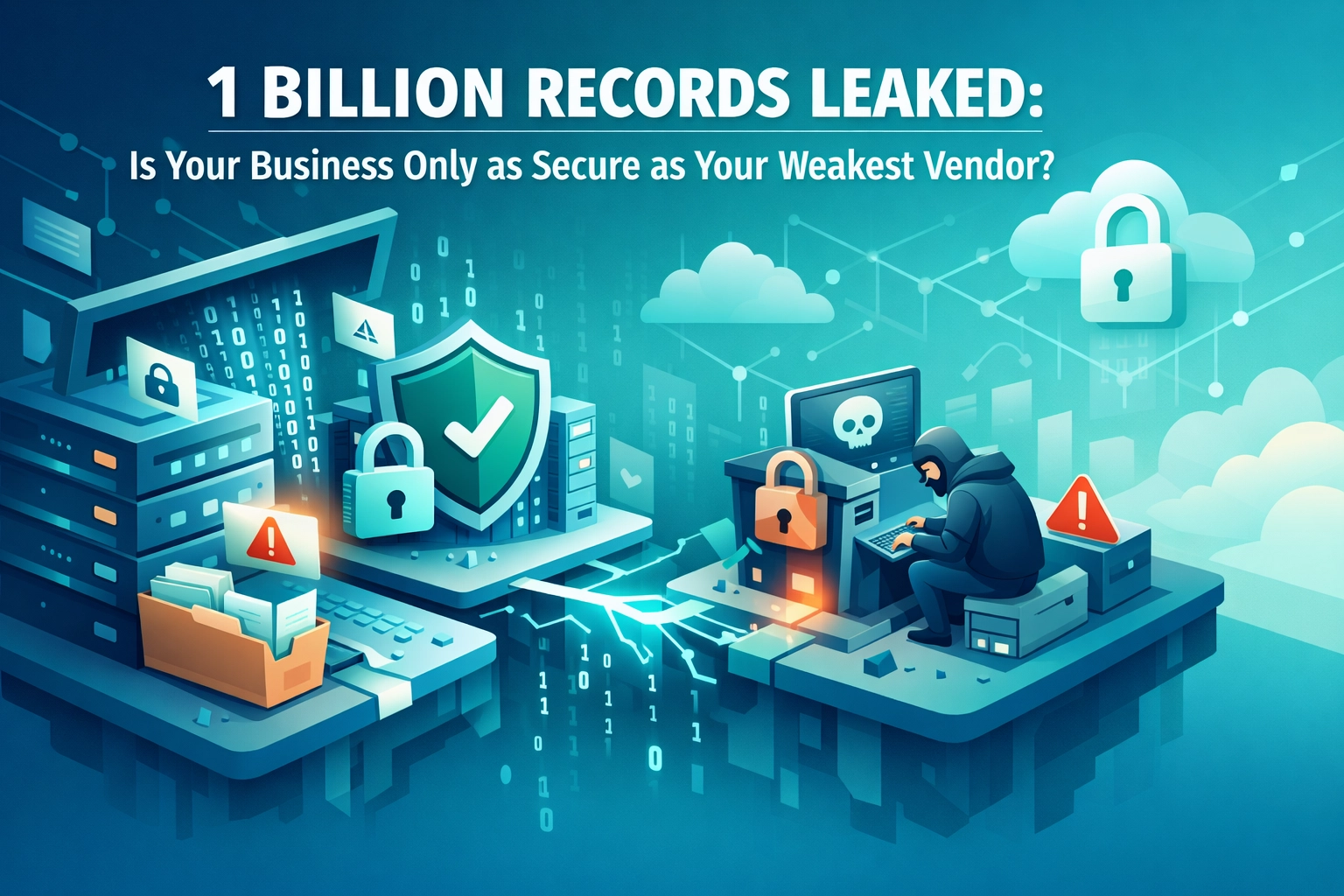
Yesterday was a bad day for data privacy. Actually, it was a catastrophic day.
As we hit March 12, 2026, the tech world is reeling from the news that IDMerit, a company many businesses trust for identity verification and "Know Your Customer" (KYC) services, has leaked a staggering 1 billion identity records. We’re talking about Social Security numbers, full names, home addresses, dates of birth, and national ID numbers. To put that in perspective, that is roughly one record for every eight people on the planet.
If you are a tax professional, a financial advisor, or a small business owner who handles sensitive Personally Identifiable Information (PII), this isn't just a headline: it’s a direct threat to your reputation and your clients’ safety.
At B&R Computers, we talk about firewalls, passwords, and encryption all day long. But today, I want to talk about the one thing that most businesses ignore until it’s too late: Third-Party Risk Management (TPRM).
Because here is the cold, hard truth: You can have the most expensive cybersecurity setup in the world, but if the vendor you use to verify your clients’ IDs leaves the digital back door wide open, you are just as vulnerable as they are.
The IDMerit Nightmare: How Did This Happen?
The IDMerit leak is a classic example of "the bigger they are, the harder they fall." What makes this particular incident so frustrating is that it wasn’t some sophisticated state-sponsored hack. It wasn’t a group of geniuses in hoodies breaking through layers of encryption.
The data: 204 million records from the United States alone: was sitting in an unsecured database. It was essentially left out on a digital porch with no lock on the door. Anyone who knew where to look could have walked in and taken it.
For businesses that use IDMerit to verify users, this is a nightmare. You outsourced a sensitive task to a "specialist" to stay compliant and secure, only for that specialist to become the single point of failure for your entire operation.

You Are Only as Secure as Your Weakest Vendor
In the cybersecurity world, we call this a "Supply Chain Attack" or a third-party breach. Think of your business security like a high-end home security system. You’ve got the cameras, the reinforced glass, and the deadbolts. But then, you give a spare key to the landscaping company so they can get into the backyard. If that landscaping company loses your key or leaves the gate wide open, your house is no longer secure.
This is exactly what is happening with vendors like IDMerit or the recently reported Conduent breach, which exposed 25 million Americans' records through a payment and document processing failure.
When you sign up for a software service (SaaS), a payroll processor, or an ID verification tool, you aren't just buying a service; you are inheriting their security posture. If their security sucks, yours does too.
The Target on the Back of Tax and Financial Pros
If you’re a CPA or a financial firm, you are a goldmine for cybercriminals. You hold the keys to the kingdom: SSNs, bank account info, and tax history.
When a vendor like IDMerit leaks 1 billion records, hackers don't just sit on that data. They use it for:
- Account Takeovers: Using leaked DOBs and SSNs to reset passwords on banking portals.
- Targeted Phishing: Crafting emails that look incredibly legitimate because they contain the victim's actual address and previous ID info.
- Tax Fraud: Filing fraudulent returns using the stolen PII before the real taxpayer even gets their W-2.
If your clients' data was part of this leak because you chose a vendor that didn't take security seriously, they won't blame the vendor. They’ll blame you.
How to Audit Your Vendors: A Proactive Checklist
You can't stop using vendors: that’s not how modern business works. But you can stop blindly trusting them. At B&R Computers, we help our clients vet their third-party partners to ensure they aren't the weak link in the chain.
Here is a checklist you should use before you hand over a single byte of client data to a vendor:
1. Do They Have a SOC2 Type II Report?
A SOC2 (System and Organization Controls) report is an independent audit that looks at how a company handles data. Specifically, look for a Type II report. This means they didn't just have good security on the day of the test; they maintained it over a long period. If a vendor can't produce this, walk away.
2. How and Where is the Data Stored?
Is it encrypted at rest and in transit? Where are their servers located? If they are using "unsecured databases" (like the ones involved in the IDMerit leak), that’s a massive red flag. You want to see "Security by Design" principles in their documentation.
3. What is Their Incident Response Plan?
Every company gets hit eventually. The difference between a professional and an amateur is the plan. Ask them: "If you have a breach, how quickly will you notify me? What is your process for remediation?" If they hesitate, they don't have a plan.
4. Who Are Their Vendors?
This is the "Fourth-Party Risk." Your vendor might be secure, but if they outsource their database management to a cut-rate provider, you’re still at risk. Ensure your contract includes the right to audit their security practices.
How B&R Computers Protects Your Perimeter
We know that as a small to mid-sized business owner, you don’t have time to read 50-page security whitepapers for every app you use. That’s why Ryan and the team at B&R Computers take a proactive approach.
We don’t just fix broken computers; we act as your virtual Chief Information Security Officer (vCISO). When we manage your IT, we:
- Audit your current "Vendor Stack": We look at every piece of software you use and identify which ones represent the highest risk.
- Implement Data Access Controls: We make sure your data is siloed. Even if a vendor is compromised, we try to ensure they only have access to exactly what they need and nothing more (the Principle of Least Privilege).
- Monitor for Dark Web Leaks: If your business credentials or your clients' data show up in a leak like the IDMerit one, we know about it fast, allowing us to change passwords and secure accounts before the hackers can move.
Don't Wait for the "We've Been Breached" Email
The IDMerit leak is a wake-up call for 2026. The days of "set it and forget it" IT are over. Your business is part of an interconnected web of vendors, and you are only as strong as the shakiest company in that web.
If you haven’t audited who has access to your data in the last six months, you are overdue. Don't let your business become a statistic in the next billion-record leak.
Ready to lock down your business and vet your vendors properly?
We can help you navigate these risks without the technical jargon. Let’s get a plan in place so you can focus on your clients while we focus on the threats.
- Book a Free Cyber Strategy Session: https://crm.bandrcomputers.com/widget/bookings/brc-cyber-strategy-session
- Download our Free SMB Cyber Playbook & Checklist: https://smbcyberplaybook.bandrcomputers.com/