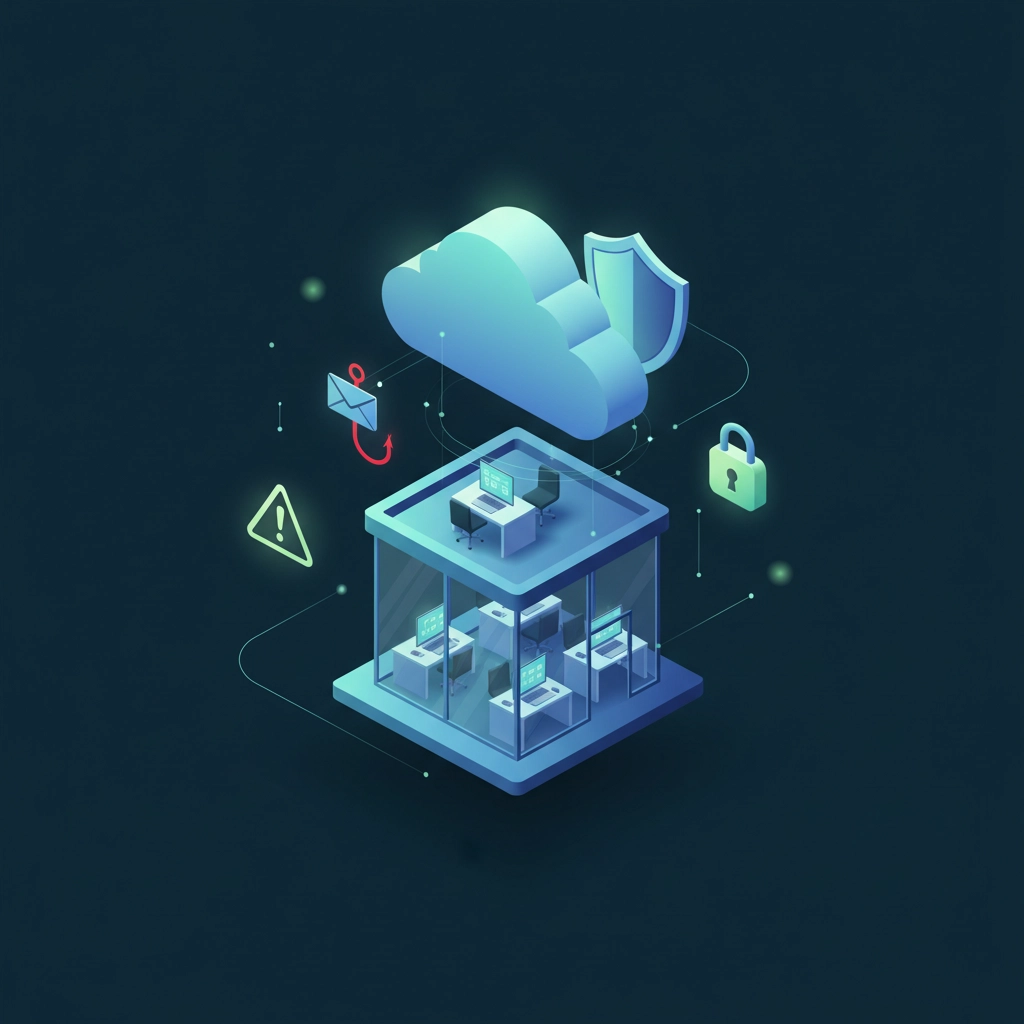
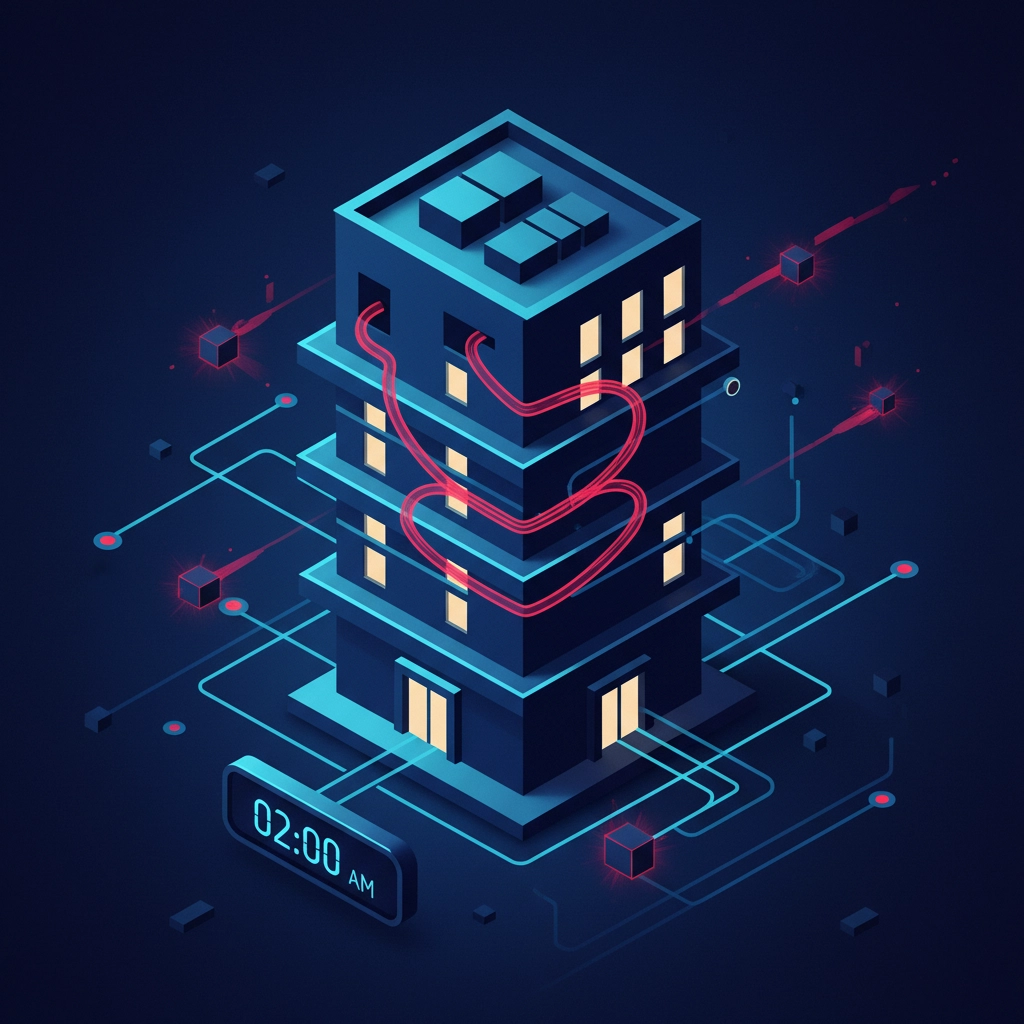
Picture this: It's 2 AM on a Tuesday. Your office is dark, your employees are sleeping, and your cybersecurity "strategy" consists of hoping nothing bad happens until 9 AM when someone might notice. Meanwhile, a cybercriminal just found a way into your network and is quietly setting up shop for what could become a million-dollar nightmare.
Sound dramatic? Here's the thing, it's not. This exact scenario plays out thousands of times every week across businesses just like yours. The difference between companies that bounce back quickly and those that don't often comes down to one simple factor: how fast they detect and respond to threats.
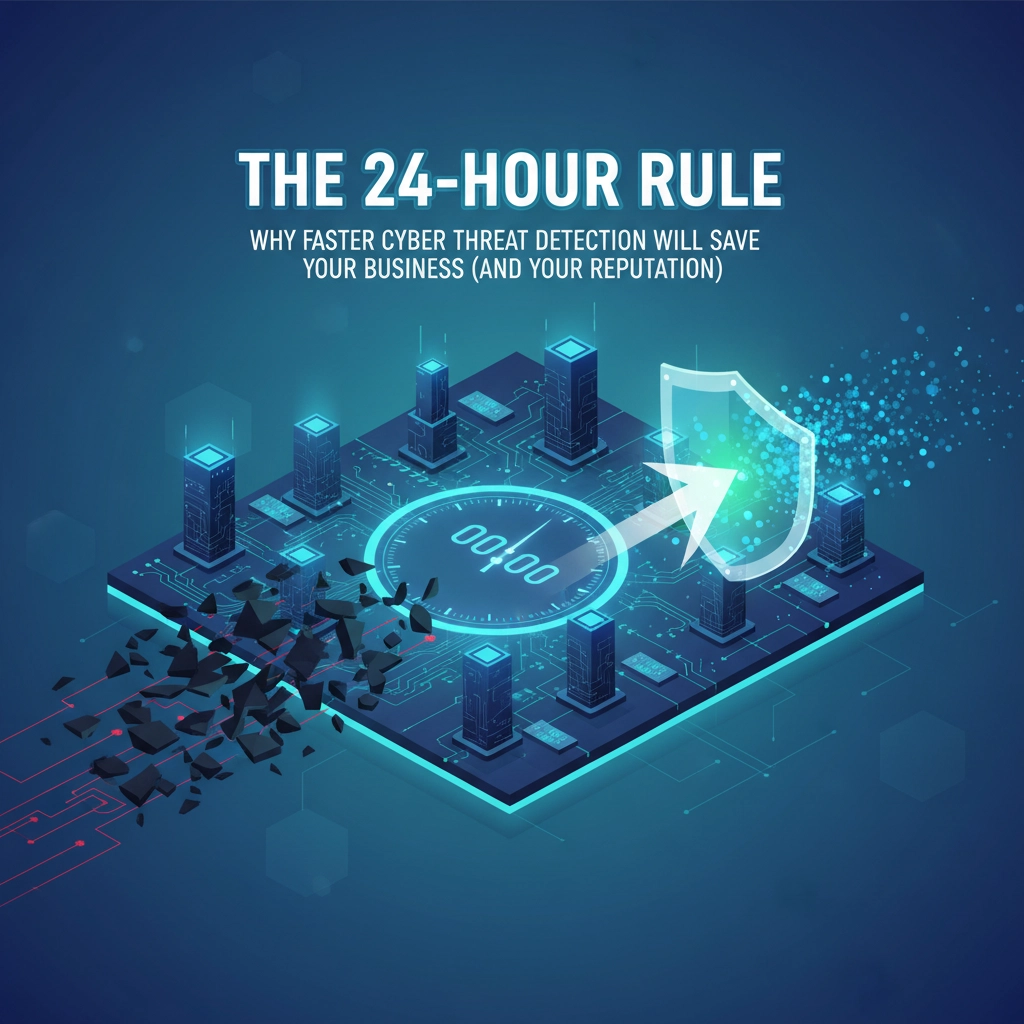
Welcome to the reality of the 24-hour rule in cybersecurity, where every minute counts and slow detection can literally cost you your business.
The Hidden Cost of "We'll Deal with It Tomorrow"
Let's talk numbers, because they're sobering. When a breach gets caught at the initial access point, think someone clicking a phishing link but nothing else happening yet, you're looking at maybe a few hundred dollars in internal response time. Catch it during the data theft phase? That cost jumps to thousands, maybe tens of thousands. But if you don't find it until after regulatory violations kick in or customer data hits the dark web? You're looking at costs that can multiply by 100 or more.
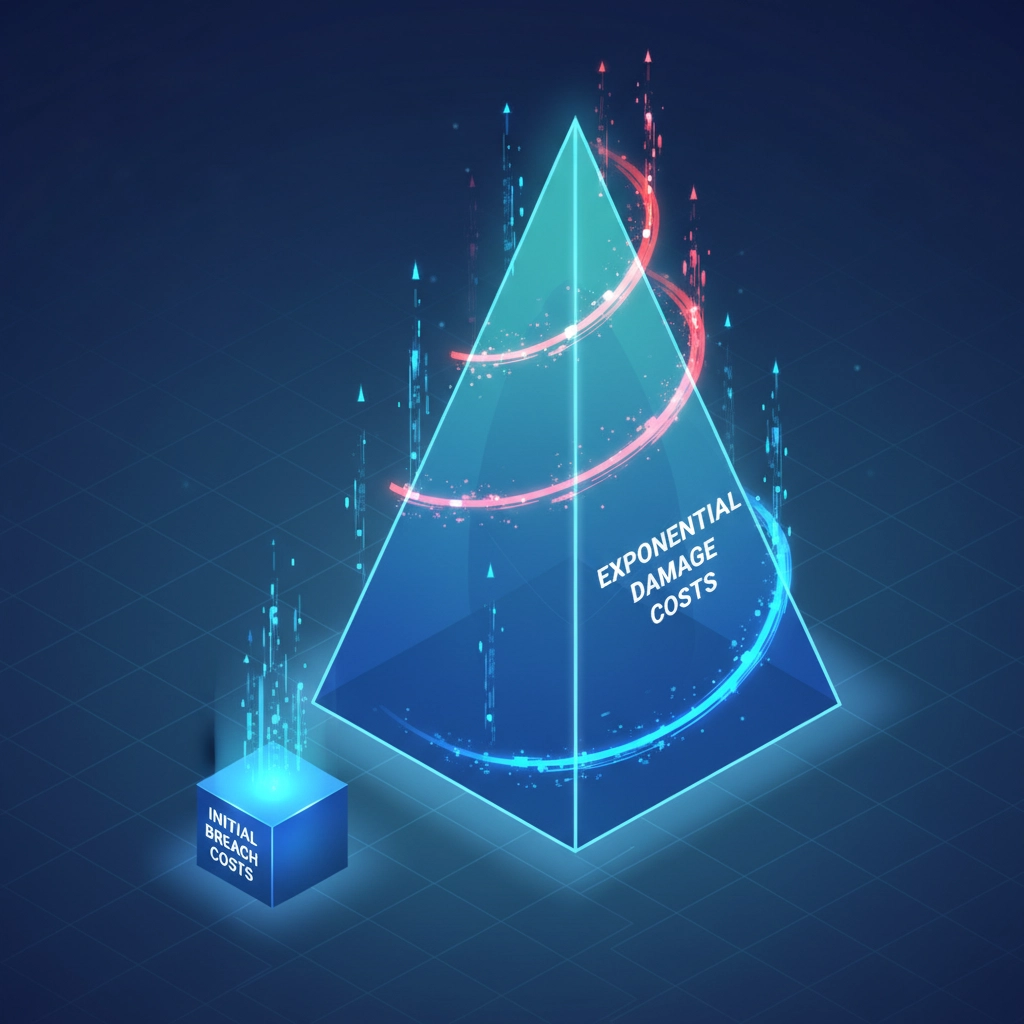
The math is brutal but simple: every hour a threat stays hidden in your network gives attackers more time to dig deeper, steal more data, and cause exponentially greater damage. We're not talking about linear cost increases here, we're talking about exponential destruction of everything you've built.
Consider this: the average business takes over 200 days to detect a breach. That's more than six months of an attacker having free rein in your systems. But with proper 24/7 monitoring, that same threat can be detected and contained in under 30 minutes. The difference between six months and 30 minutes isn't just operational, it's existential for many businesses.
Why Cybercriminals Love Your 9-to-5 Schedule
Here's something that should keep you up at night: 76% of successful ransomware attacks happen outside normal business hours. That's not a coincidence, it's strategy.
Cybercriminals aren't stupid. They know that most small and medium businesses run their cybersecurity like it's 1995, with a "check the systems in the morning" mentality. They deliberately time their attacks for when your team is home watching Netflix, because they know they'll have hours, sometimes an entire weekend, to work undisturbed.
Think about what an attacker can accomplish in just seven hours of undetected access (say, from 2 AM to 9 AM):
- Install persistent backdoors that survive system reboots
- Escalate privileges to administrator level
- Map out your entire network structure
- Locate and access your most sensitive data
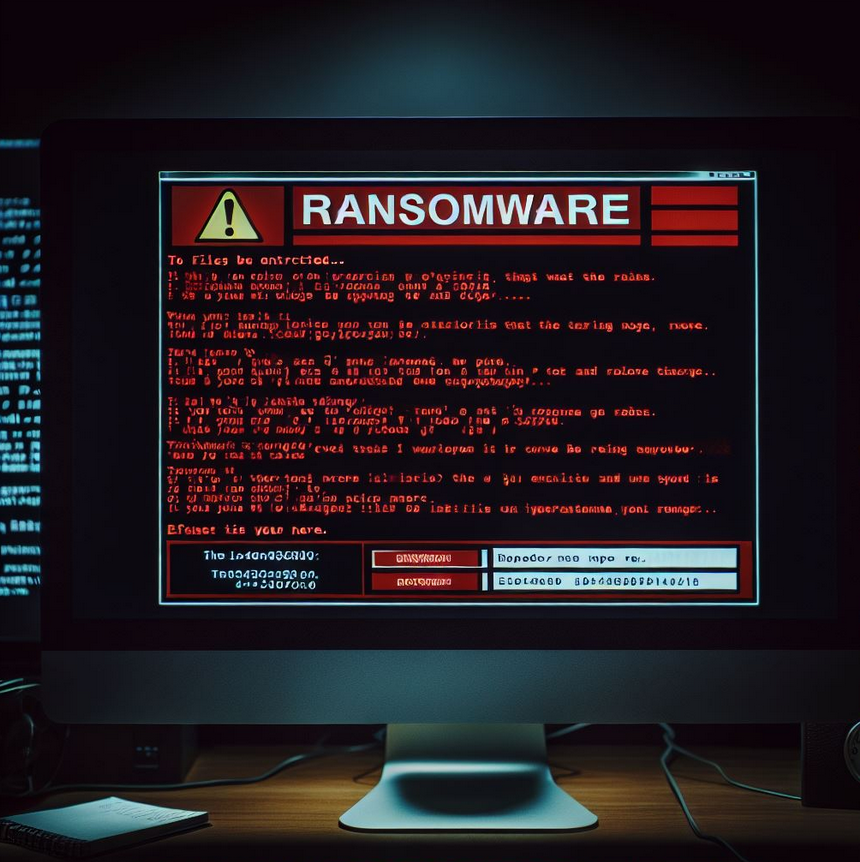
- Begin encrypting files for a ransomware attack
- Establish multiple exit points for ongoing access
By the time your team arrives with their morning coffee, the damage is already done. The attack you could have stopped in minutes has become a full-scale invasion that might take weeks or months to fully remediate.
What Real 24/7 Protection Actually Looks Like
Real 24/7 threat detection isn't just about having software running: it's about having trained security experts watching your systems around the clock, ready to act the moment something looks suspicious.
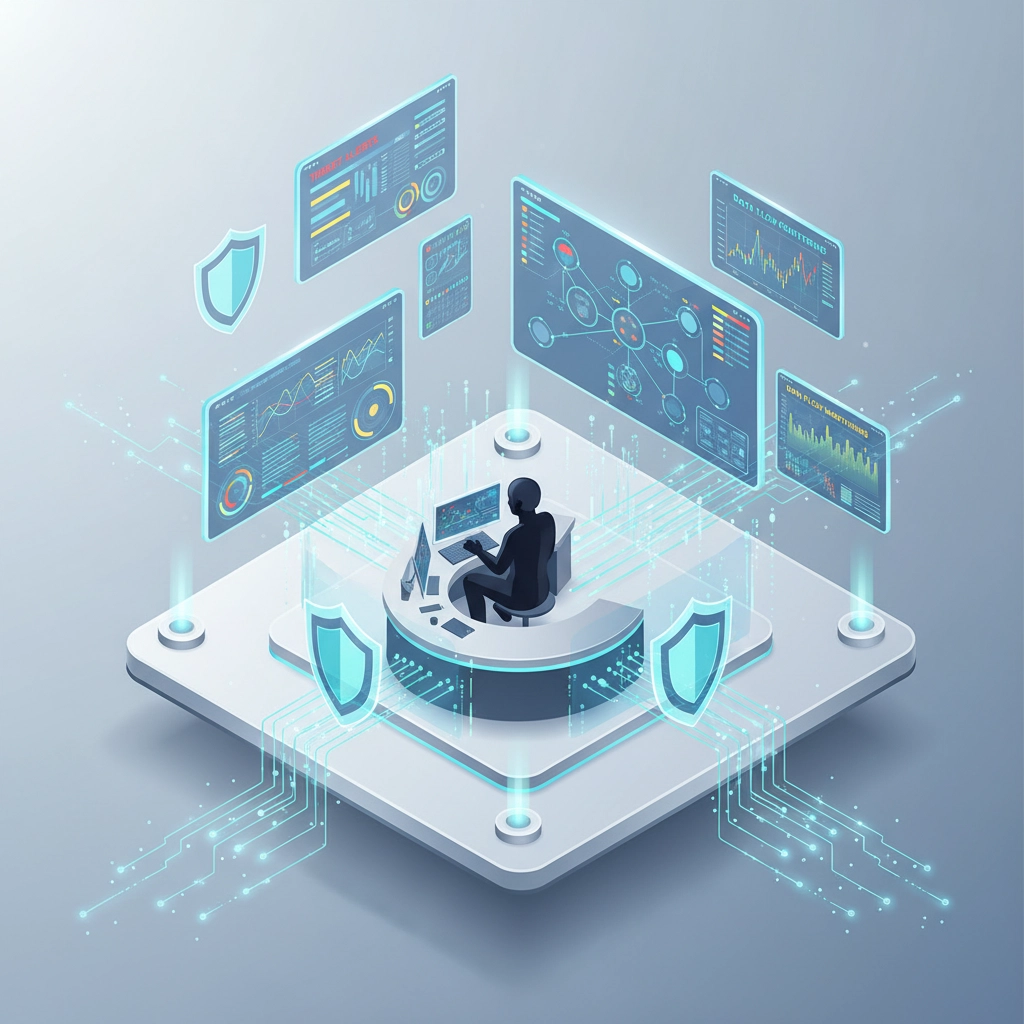
Here's how it works in practice: Advanced monitoring tools use machine learning to establish baseline behavior for your network. When something deviates from normal: like a user account suddenly accessing files it's never touched, or data moving in unusual patterns: the system flags it immediately.
But here's the crucial part: that alert doesn't just sit in a queue waiting for morning. It goes to a Security Operations Center (SOC) where trained analysts are standing by 24/7. These aren't just technicians: they're cybersecurity experts who can tell the difference between a false alarm and a real threat, and who know exactly how to respond when seconds count.
When they confirm a real threat, the response is immediate: isolate infected systems, block malicious network traffic, preserve evidence, and coordinate with your internal team to neutralize the risk. What could have been a devastating breach becomes a contained incident that barely registers on your business operations.
The Reputation Protection You Can't Put a Price On
Let's be honest about something: in today's world, your reputation might be more valuable than your physical assets. A single data breach can destroy decades of trust-building with customers, partners, and stakeholders.
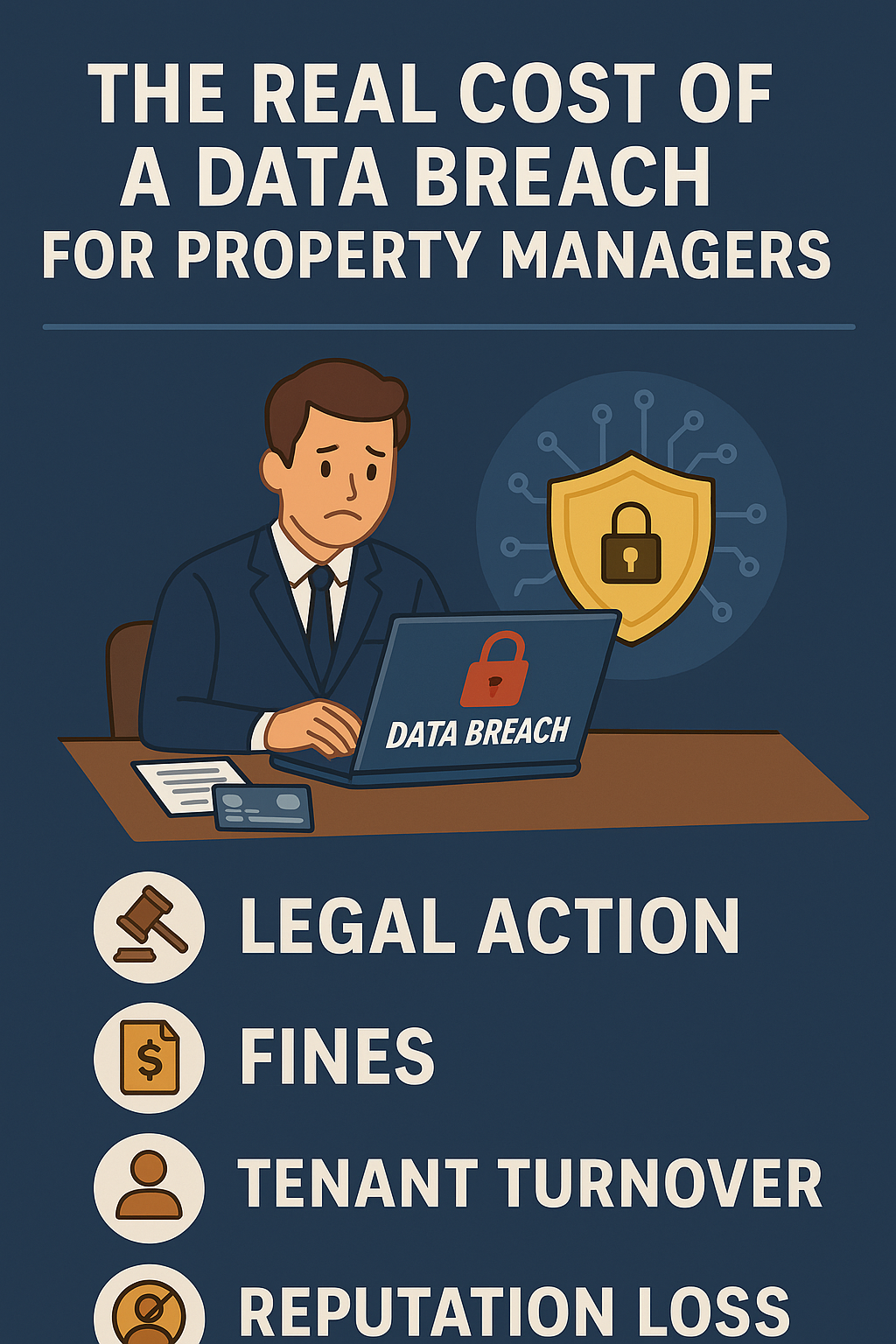
When customer data gets stolen because you didn't detect an attack for weeks, you're not just dealing with the technical cleanup: you're dealing with:
- Mandatory breach notifications that become public record
- Customer lawsuits and potential class actions
- Regulatory investigations and fines
- Lost business from customers who no longer trust you
- Increased insurance premiums (if you can get coverage at all)
- The nightmare of rebuilding your brand reputation from scratch
But fast detection changes this entire equation. When threats get caught and contained within minutes, before any data is actually compromised, none of these reputation-destroying consequences kick in. Your customers never even know there was a threat. Your regulators don't get involved. Your business continues operating normally.
That's the real power of the 24-hour rule: it's not just about preventing technical damage: it's about preserving everything you've worked to build.
Practical Steps You Can Take Right Now
You don't need a million-dollar security budget to dramatically improve your threat detection speed. Here are practical steps that any business can implement:
Start with the basics:
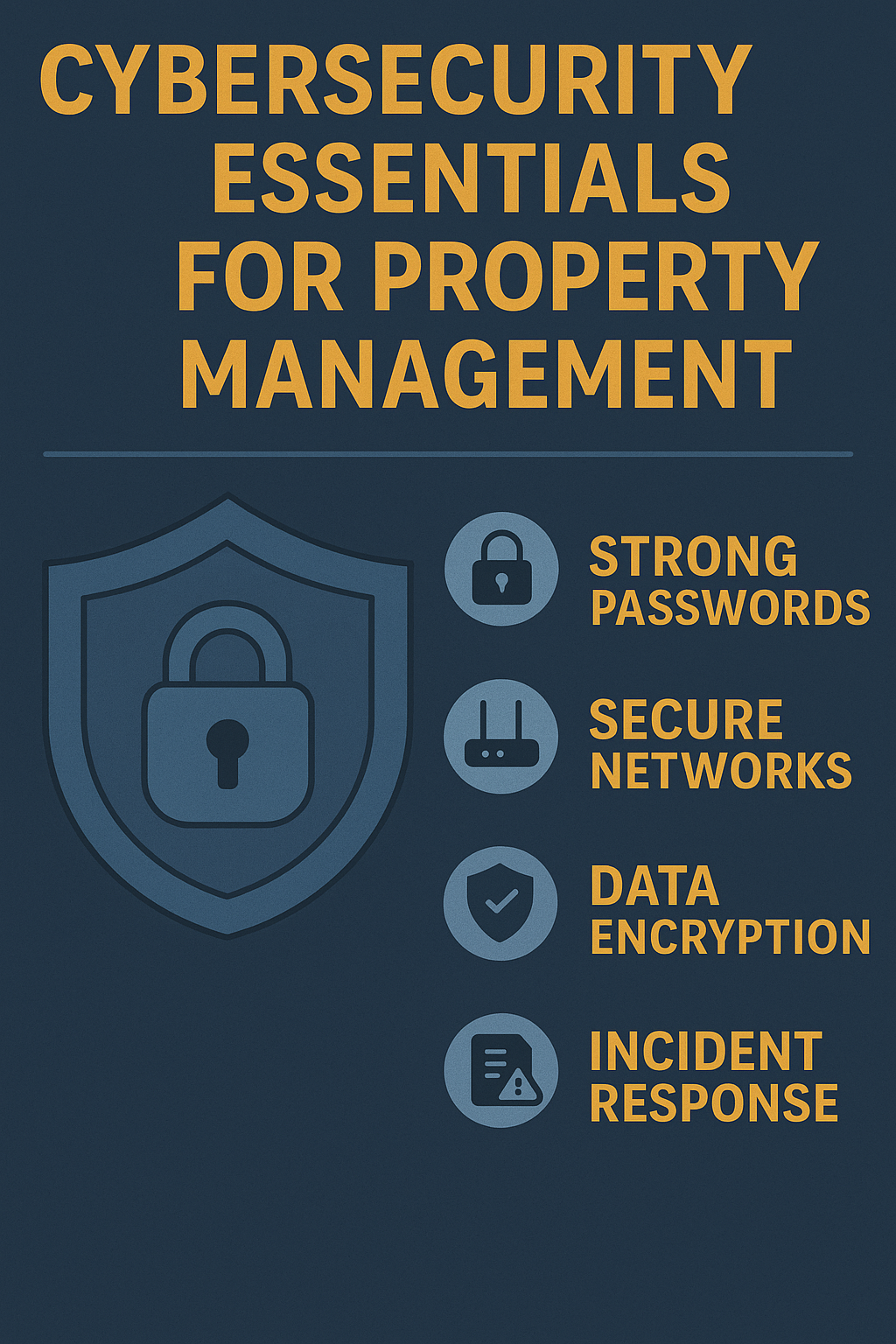
- Implement endpoint detection and response (EDR) tools on all devices
- Set up network monitoring that can spot unusual traffic patterns
- Deploy email security that goes beyond basic spam filtering
- Establish automated backup systems with offline copies
Level up your monitoring:
- Partner with a managed security service provider (MSSP) for 24/7 SOC coverage
- Implement security information and event management (SIEM) tools
- Set up automated incident response playbooks
- Establish clear escalation procedures for different threat levels
Focus on the human element:
- Train employees to recognize and report suspicious activity
- Conduct regular phishing simulations
- Establish a security-first culture where reporting potential issues is encouraged, not penalized
- Keep contact information updated for after-hours emergencies
The key is layering these defenses so that if one fails, others catch what it missed. No single tool is perfect, but a comprehensive approach dramatically reduces your risk.
How B&R Approaches Continuous Monitoring
At B&R Computers, we've seen too many businesses learn about the importance of fast detection the hard way. That's why our approach centers on proactive, continuous monitoring rather than reactive "fix it when it breaks" thinking.
Our 24/7 Security Operations Center combines advanced threat detection tools with human expertise to monitor client networks around the clock. When we detect suspicious activity, we don't wait for business hours: we act immediately to contain threats before they can cause damage.
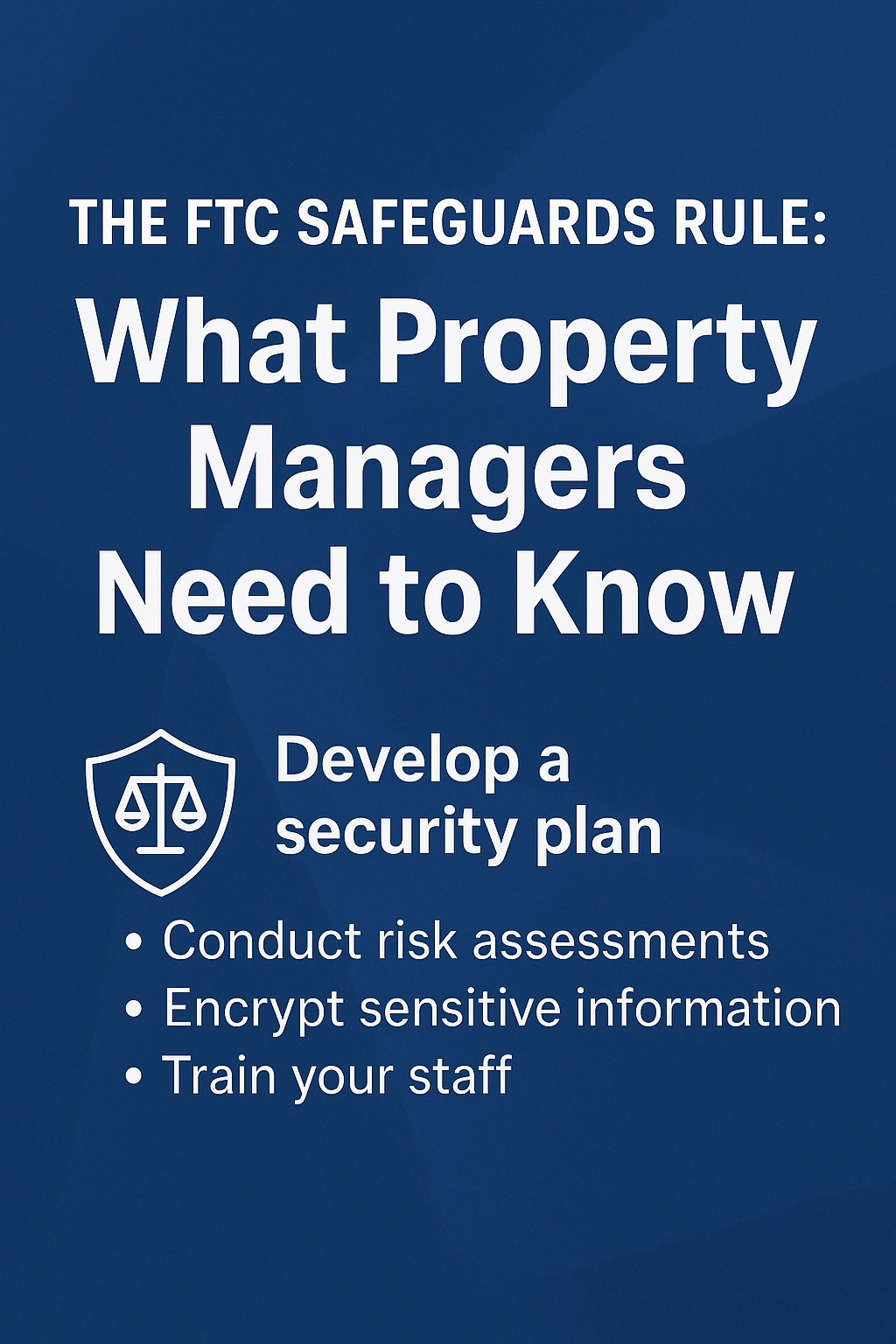
But monitoring is just one piece of the puzzle. We also focus on helping businesses build comprehensive cybersecurity strategies that include proper incident response planning, frameworks like NIST CSF 2.0, and turning IT partnerships into growth enablers rather than just technical support.
The Bottom Line: Speed Saves Everything
The 24-hour rule in cybersecurity is simple: the faster you detect and respond to threats, the less damage they can cause. But the implications of that simple rule are profound: it's the difference between a minor security incident and a business-ending catastrophe.
Every minute you wait to implement proper 24/7 threat detection is another minute you're gambling with everything you've built. The attackers aren't waiting for you to get your security act together: they're actively targeting businesses just like yours, right now, while you're reading this.
The good news? You don't have to face this alone. Modern cybersecurity solutions make enterprise-grade protection accessible to businesses of all sizes, and the return on investment is measured not just in dollars saved, but in reputation preserved and business continuity maintained.
Ready to stop gambling with your business security? Contact B&R Computers today to learn how our 24/7 monitoring and comprehensive cybersecurity solutions can protect your business, your customers, and your reputation. Because when it comes to cybersecurity, the best time to act was yesterday( the second-best time is right now.)